

If you are wondering how long should I walk daily to lose weight, establishing a consistent walking schedule paired with a proper brisk pace is key. Walking is one of the most accessible and effective forms of aerobic exercise for burning calories and improving cardiovascular health. In this practical guide, you will learn exactly how many minutes to walk, how to track your pace, and when you can expect visible results. Read on.
Quick Answer
- Daily Duration: Walk at a brisk pace for at least 30 minutes daily, 5 days a week (totaling 150 minutes weekly).
- Optimal Speed: Aim for a brisk pace of 3.5 to 4.5 mph (5.6 to 7.2 km/h) that raises your heart rate while letting you talk.
- Beginner Step Goal: Start with 3,000 to 5,000 steps daily or 10-to-15-minute walks, gradually adding time and steps weekly.
- Combine with Diet: Pair daily walking with a moderate calculated calorie deficit for fat loss and resistance training twice weekly.
- Track Progress: Use a smartwatch or smartphone app to monitor duration, step counts, and intensity.
How Long Should I Walk Daily to Lose Weight?
To achieve noticeable fat reduction through walking, target a moderate-to-brisk pace for at least 30 minutes a day, 5 days per week. Elevating your heart rate during these sessions burns significantly more energy than casual strolling.
Completing 150 minutes of moderate physical activity weekly aligns with official recommendations from the U.S. Department of Health and Human Services (HHS). For maximum weight management, increasing your total activity toward 300 minutes weekly yields even faster results.
If you have a busy schedule, split your daily walking into three 10-minute segments. Taking stairs instead of elevators or taking brisk breaks during work hours still contributes toward your total daily calorie burn.
Does Walking Help You Lose Weight?
Yes, regular walking supports weight loss, but your total results depend on your walking speed, daily duration, and nutrition habits. Research highlighted by Harvard Health indicates that 30 minutes of brisk walking burns roughly 150 extra calories depending on your body weight.
To maximize your weight loss progress:
- Spread your brisk walking sessions across most days of the week.
- Combine physical movement with high-protein meal options to keep appetite controlled.
- Incorporate basic strength training twice a week to preserve lean muscle tissue.
Does Walking Speed Matter for Fat Loss?
When asking how long should I walk daily to lose weight, walking speed plays a massive role in your overall energy expenditure. A brisk speed of 3.5 to 4.5 mph (5.6 to 7.2 km/h) is ideal for fat burning without straining your joints.
At this brisk pace, your heart rate reaches approximately 60% to 70% of its maximum capacity. Breathing becomes heavier, but you should still be able to hold a conversation comfortably.
How to Check Your Walking Speed
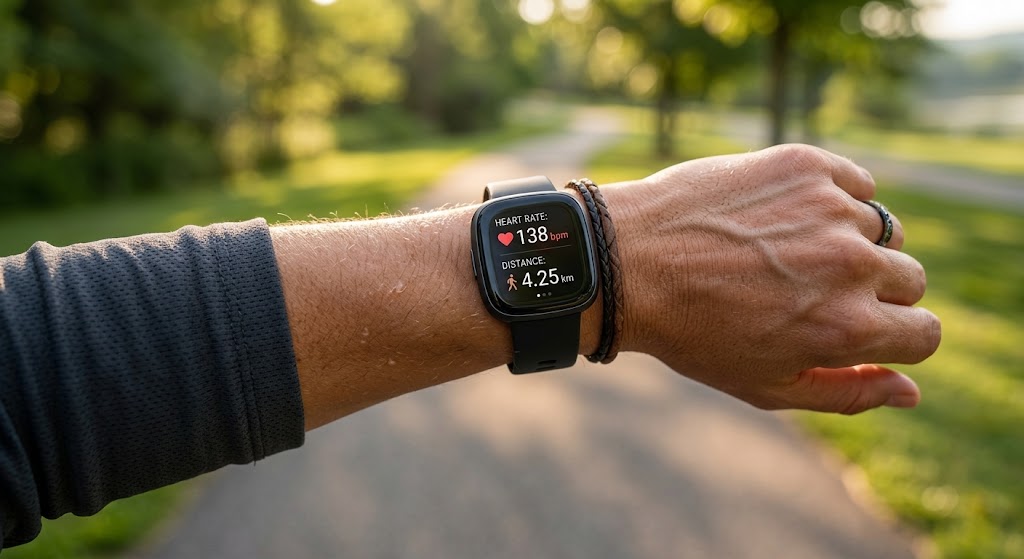
Walk for 10 minutes while tracking your distance with a smartphone GPS or smartwatch. Divide the distance covered by time to calculate your average speed. If your speed falls below 3.5 mph, incorporate short speed intervals to increase intensity.
How to Build a Daily Walking Routine
Building a daily walking routine requires establishing manageable habits rather than pushing to exhaustion right away. Fitness insights from the Academy of Nutrition and Dietetics recommend increasing step targets progressively over several weeks.
Start with a baseline goal of 3,000 to 5,000 steps daily. Once this feels comfortable, add 300 to 500 steps every few days until you reach 8,000 to 10,000 steps.
Maintain proper walking form to prevent joint strain:
- Posture: Stand tall, look 10 to 20 feet ahead, keep your core engaged, and relax your shoulders.
- Arm Swing: Bend elbows at 90 degrees and swing arms naturally from the shoulders.
- Stride Technique: Land smoothly on your heel, roll through the midfoot, and push off with your toes using quick, natural strides.

How Long Does It Take to See Weight Loss From Walking?
When determining how long should I walk daily to lose weight, understanding the timeline of physical changes keeps your motivation high:
- First Session to Week 1: A single 10-minute walk improves mood, energy, and circulation. By week one, sleep quality improves and abdominal bloating decreases.
- Weeks 2 to 4: Consistent brisk walking starts producing visible body changes. Clothing fits loosely, endurance improves, and scale weight can drop by 1 to 5 pounds.
- Months 1 to 3: Maintaining a daily walking routine alongside a consistent calorie deficit supports a steady weight loss rate of 1 to 2 pounds weekly.
- Months 3 to 6: Cardiovascular endurance increases significantly, leg muscle tone becomes visible, and resting metabolic rate improves.
Common Walking Mistakes to Avoid
If you want clear answer to how long should I walk daily to lose weight without hitting plateau, avoid these common mistakes:
- Walking Too Slowly: Strolling casually without raising your heart rate limits overall caloric expenditure.
- Ignoring Diet Quality: Overeating after walks can easily negate the calories burned during exercise.
- Overstriding: Taking excessively long strides increases impact on knees and shins. Focus on faster, smaller steps instead.
- Neglecting Rest & Sleep: Sleeping less than 6 hours a night spikes stress hormones, impairing muscle recovery after workouts.
Frequently Asked Questions
1. Do I need to reach 10,000 steps every single day?
No. You can start with a realistic target of 3,000 to 5,000 steps daily and gradually work your way up as your endurance builds.
2. How long should I walk daily to lose weight if I am a complete beginner?
Beginners should start with 10 to 15 minutes of moderate walking daily, 3 to 5 times per week, slowly increasing duration as fitness improves.
3. Can I split my daily walking time into shorter sessions?
Yes. Splitting your daily walks into two or three 10-minute brisk sessions provides the exact same caloric and cardiovascular benefits as one continuous 30-minute walk.
4. How do I know if my walking pace is fast enough for fat loss?
You should feel your heart rate rise and breathing deepen, making it possible to speak in short sentences but difficult to sing.
5. What should I do if my weight loss stalls while walking daily?
If progress stalls, review your portion tracking, increase your walking duration by 10 minutes, or add short high-intensity walking intervals to boost energy burn.