
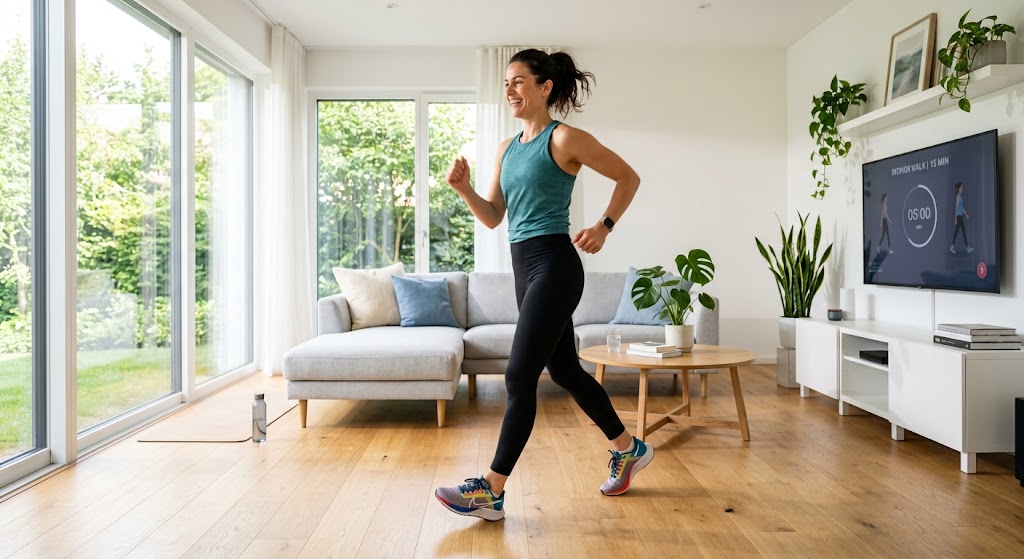
Finding enough space to stay active at home can feel challenging, especially if you do not own gym equipment. Learning how to walk indoors for exercise without a treadmill allows you to turn ordinary rooms, hallways, and staircases into an effective fitness routine. In this complete guide, you will discover simple space-saving techniques, high-energy exercise variations, and routine structures to keep moving every day. Read on.
Quick Answer
- Use Available Space: Walk loops through hallways, open living areas, between connected rooms, or up and down interior stairs.
- Adapt to Small Spaces: March in place, perform side-step touches, heel digs, or high-knee lifts if room size is limited.
- Structure Your Sessions: Start with 10-minute movement blocks and gradually build toward continuous 20 to 30-minute sessions.
- Maintain Variety: Alternate your pace, switch directions, or add short brisk intervals to keep your workout engaging.
- Prioritize Safety: Clear rugs, electrical cords, and furniture before starting, while maintaining upright posture and smooth steps.
How to Walk Indoors for Exercise Without a Treadmill
Creating a structured home walking routine is easy when you utilize the available layout of your living space. By varying your movements, you can burn calories and build cardiovascular endurance without specialized equipment.
1. Walk Laps Around Your Home
Set up a simple walking path through your house. Walk back and forth down a long hallway, map a figure-eight loop around your living room furniture, or move between connected rooms. If you live in a multi-story home, adding stair loops is an excellent way to elevate your heart rate and build lower-body strength.
According to physical activity guidelines supported by the Mayo Clinic, consistent daily walking improves cardiovascular health, boosts energy levels, and aids in long-term body weight management.
2. March in Place When Space Is Limited
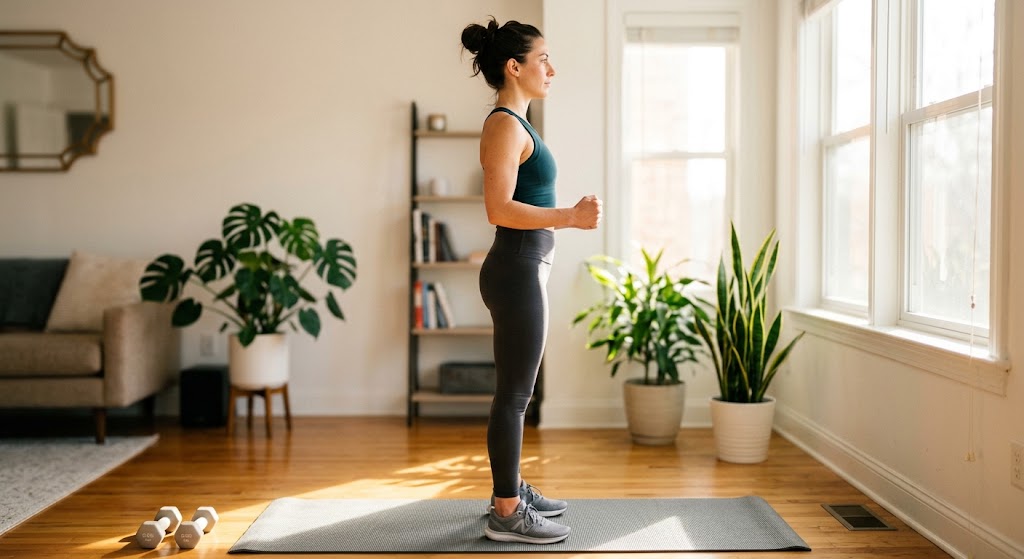
If you have limited room, marching in place offers a space-efficient alternative. Stand tall with your shoulders relaxed, engage your core muscles, look straight ahead, and lift your knees rhythmically while letting your arms swing naturally at a 90-degree angle.
3. Combine Different Movement Variations
Prevent boredom by changing your walking speed, route, and direction every few minutes. Intersect walking laps with high knees, side steps, or light bodyweight movements to build an energetic indoor circuit workout.
Indoor Walking Exercises You Can Do at Home
Before beginning your session, clear loose rugs, stray cords, and small furniture items to create a safe, clear path. Ensure you have enough room to swing your arms freely without hitting obstacles.
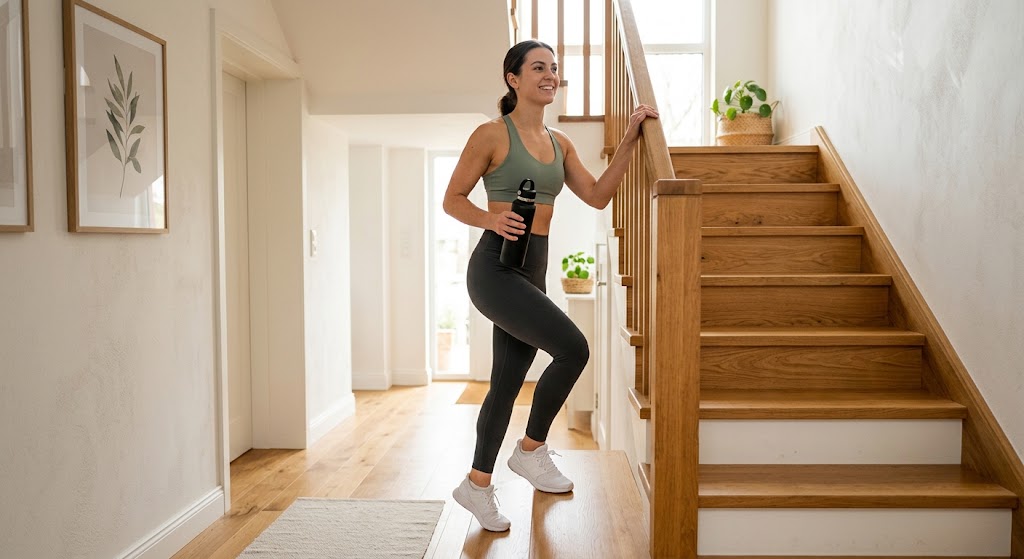
Try Stair Walking
Incorporating stairs into your routine adds vertical resistance, targeting your glutes, hamstrings, and calves. Step firmly on each tread, maintain upright balance, and use handrails lightly if needed for safety.
Add Easy Walking Intervals
Introducing interval training keeps your heart rate elevated and maximizes calorie burn. Try incorporating these simple movements into your routine:
- Marching in Place: Lift your knees toward waist height while pumping your arms in rhythm.
- Step Touches: Step wide to the right, bring your left foot in to touch, then step wide to the left.
- Heel Digs: Place one heel lightly in front of you with toes pointed up, return to center, and alternate legs.
- Knee Lifts: March in place while driving your knees higher to activate your core and hip flexors.
To execute a simple interval setup, walk or march at an easy pace for 3 minutes, increase to a brisk pace for 1 minute, and repeat the cycle throughout your session.

How Long Should You Walk Indoors?
Workout duration depends heavily on your current fitness level and daily schedule. When deciding how to walk indoors for exercise without a treadmill, structure your duration to match your personal goals.
Beginner Indoor Walking Routine
If you are new to regular exercise or short on time, short movement blocks yield great benefits:
- 10-Minute Sessions: A brief 10-minute walk provides an instant mood boost, reduces mental stress, and supports post-meal blood sugar regulation.
- Gradual Progression: Start with two or three 10-minute sessions spread across the day, slowly extending session length as your stamina improves.
Break Longer Walks Into Shorter Sessions
If finding an uninterrupted 30-minute block is difficult, breaking your daily movement into smaller blocks is effective. Aim for continuous bursts of at least 15 minutes to maximize cardiovascular protection and endurance benefits.
If fat loss is your primary fitness goal, ensure your exercise routine is paired with an appropriate nutritional plan. Learn how to calculate calorie deficit for fat loss to support your daily walking efforts.
Common Mistakes to Avoid With Indoor Walking
Proper form prevents fatigue and protects your joints during home workouts. Avoid these common indoor walking errors:
- Slouching or Leaning Forward: Keep your chest open, shoulders relaxed, and gaze directed 10 to 15 feet ahead to maintain spinal alignment.
- Exaggerated Arm Movements: Keep your elbows bent at roughly 90 degrees and swing your hands naturally from hip to chest height.
- Overstriding: Take natural, comfortable steps. Reaching too far forward increases joint impact and causes premature fatigue.
- Stomping or Heavy Footfalls: Land softly on your heels and roll smoothly forward to push off with your toes.
- Skipping Warm-Ups and Cool-Downs: Always start with 3 to 5 minutes of slow marching and end with gentle stretches for your calves, hamstrings, and hips.
- Holding Hand Weights: Avoid holding dumbbells while walking, as this can strain your wrists and shoulders. Keep your hands free and stay hydrated during longer workouts.
- Inconsistent Routine Habits: Skipping workouts or staying inactive during desk hours slows your progress. You can also explore whether three 10 minute walks vs one 30 minute walk fits better into your daily schedule.
How to Build a Simple Indoor Walking Routine
Consistency is key when building home fitness habits. Using a simple 20-minute daily framework makes staying active easy.
A Simple 20-Minute Indoor Walking Plan
- Warm-Up (5 Minutes): March slowly in place, gently roll your shoulders, and stretch your dynamic leg muscles.
- Main Workout (10 to 12 Minutes): Combine brisk hallway laps, figure-eight room loops, step touches, and stair climbs.
- Cool-Down (3 to 5 Minutes): Slow down your walking pace to let your heart rate return to baseline.
- Post-Workout Stretch: Finish with static stretches targeting your calves, quadriceps, hamstrings, and lower back.
Complement your movement routine with good recovery habits, healthy eating, and sound sleep. Check our guide on the effects of sleeping less than 6 hours a night to understand how sleep impacts fat loss and physical recovery.
Frequently Asked Questions
1. Can you get a good workout by walking indoors without a treadmill?
Yes. Walking laps, marching in place, using stairs, and adding brisk interval bursts effectively elevate your heart rate and burn calories at home.
2. How can I walk indoors if I have very little space?
Marching in place, performing side-step touches, knee lifts, and heel digs allow you to get an effective workout within a small footprint.
3. Is marching in place as effective as walking forward?
Marching in place burns calories and increases heart rate effectively, making it a great space-saving alternative, though forward walking engages slightly different gait mechanics.
4. How many minutes should I walk indoors each day?
Beginners can start with 10 to 15 minutes daily and gradually increase toward 30 minutes as cardiovascular endurance improves.
5. Can indoor walking assist with weight loss?
Yes. Indoor walking increases total daily energy expenditure. When combined with a balanced diet and consistent caloric deficit, it supports healthy fat loss.