
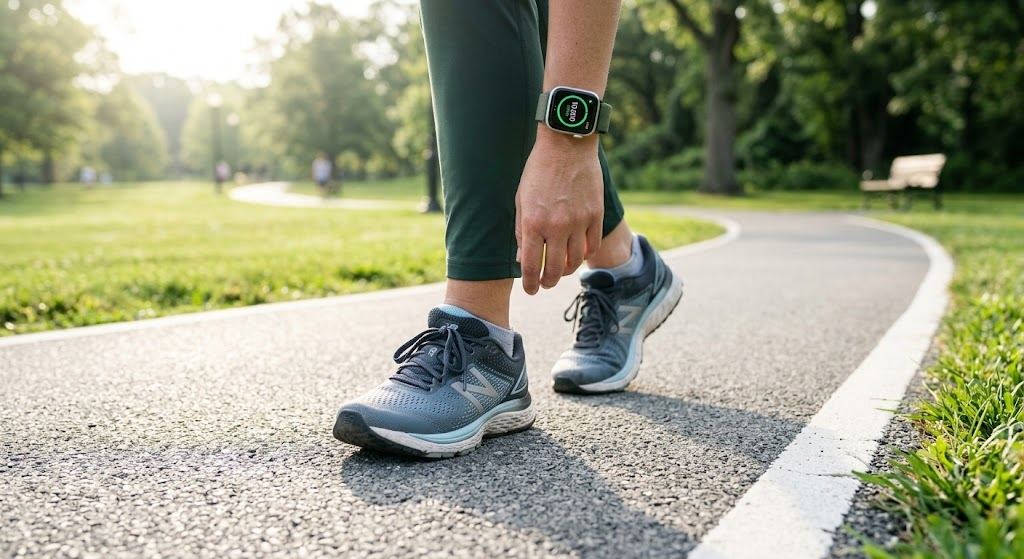
Understanding how many steps a day help with weight loss allows you to optimize your daily activity without setting unrealistic expectations. Combining consistent daily movement, brisk walking, and modest dietary adjustments provides a highly effective approach to sustainable fat reduction. In this complete guide, you will learn how to determine your optimal step targets, calculate calorie expenditure, and track your daily progress with confidence. Read on.
Quick Answer
- Target Baseline Range: Aim for 7,000 to 10,000 daily steps rather than viewing 10,000 steps as an inflexible requirement.
- Focus on Brisk Movement: Walk briskly for 30 to 60 minutes, 5 to 6 days per week, to increase your physical burn.
- Combine Steps with Diet: Pair increased daily steps with a modest 250 to 400 daily calorie deficit for steady progress.
- Overcome Plateaus with NEAT: Boost daily movement through standing breaks, short post-meal walks, and household chores when weight loss stalls.
- Alternative Tracking: If tracking step counts feels restrictive, log 30 to 60 minutes of daily brisk walking instead.
How Many Steps Should You Walk to Lose Weight?
The widely quoted 10,000-step recommendation originated as a 1960s Japanese marketing campaign for a pedometer called the manpo-kei, rather than an absolute scientific standard.
In reality, meaningful health improvements and fat loss begin at lower numbers. Increasing activity to roughly 7,000 steps daily offers significant support for previously inactive individuals aiming to shed excess weight. Research indicates that adults maintaining 7,000 to 8,000 daily steps experience improved weight management and overall health markers.
Beyond total volume, factor in your consistency, walking pace, and time spent sitting. You can burn additional calories by increasing your walking speed, traversing inclines, or extending workout durations. While physical movement supports your energy shortfall, maintaining a proper diet remains the primary driver of body fat reduction. To optimize your intake alongside daily activity, learn how to calculate calorie deficit for fat loss accurately.
How Walking Helps With Weight Loss
To maximize results when determining how many steps a day help with weight loss, structure your walking routine with sufficient intensity. Health guidelines recommend 200 to 300 minutes of moderate-intensity movement weekly for weight reduction, exceeding the 150 minutes suggested for basic health maintenance.
You can divide this time across 5 to 6 weekly sessions, walking briskly at 3.0 to 4.0 mph for 30 to 60 minutes. A true brisk pace allows you to converse in full sentences but prevents comfortable singing. Walking below this intensity threshold reduces total caloric expenditure.
Staying below 7,000 daily steps generally keeps body weight in a maintenance phase, while pushing far beyond 10,000 steps yields diminishing extra benefits for average fitness goals. Combining 30 to 60 minutes of daily brisk walking with a modest 250 to 400 calorie dietary gap creates a far more sustainable routine than relying solely on exercise.

How Many Steps a Day to Lose 1 Pound?
Losing one pound of fat mass requires creating a cumulative energy shortfall of roughly 3,500 calories. Depending on your current body mass and walking speed, this translates to approximately 70,000 to 100,000 total steps.
For example, a 155-pound individual walking at a moderate pace burns about 0.04 calories per step, requiring roughly 87,500 steps to burn 3,500 calories. Required step totals vary based on body weight:
- 200 lbs: Approximately 67,000 total steps
- 155 lbs: Approximately 87,500 total steps
- 120 lbs: Approximately 106,000 total steps
Walking at a brisk 3.5 to 4.0 mph speed increases calorie expenditure per step by 20% to 35% compared to a casual stroll, lowering the total steps required.
Timeline Projections (155-lb Individual)
Adding extra daily steps alters your fat loss timeline:
- +1,000 steps daily: 1 lb lost in 12 to 13 weeks
- +2,000 steps daily: 1 lb lost in 6 to 7 weeks
- +3,000 steps daily: 1 lb lost in 4 to 5 weeks
- +5,000 steps daily: 1 lb lost in 2 to 3 weeks
Combining added steps with dietary changes accelerates overall progress. In a 12-week study, sedentary adults increasing activity to 10,000 steps lost an average of 5.7 pounds, whereas those who also reduced daily intake by 250 calories lost 9.3 pounds.

Steps, Calorie Deficit, and Weight Loss
Daily step volume forms a key part of Non-Exercise Activity Thermogenesis (NEAT)—the calories expended through daily movement, standing, fidgeting, and routine tasks outside structured exercise.
Why Movement Drops During Diets
When you restrict food intake, your body subconsciously conserves energy by reducing spontaneous movement like fidgeting or pacing. To determine if your overall baseline burn has dropped, review how to calculate your TDEE for weight loss and compare your estimated energy needs against real-world progress.
If your weight loss progress stalls due to reduced movement, revive your momentum by:
- Increasing intentional daily step counts
- Taking frequent standing breaks during desk work
- Completing quick household chores throughout the day
- Taking 10-minute short walks immediately after meals
How to Track Your Steps for Weight Loss
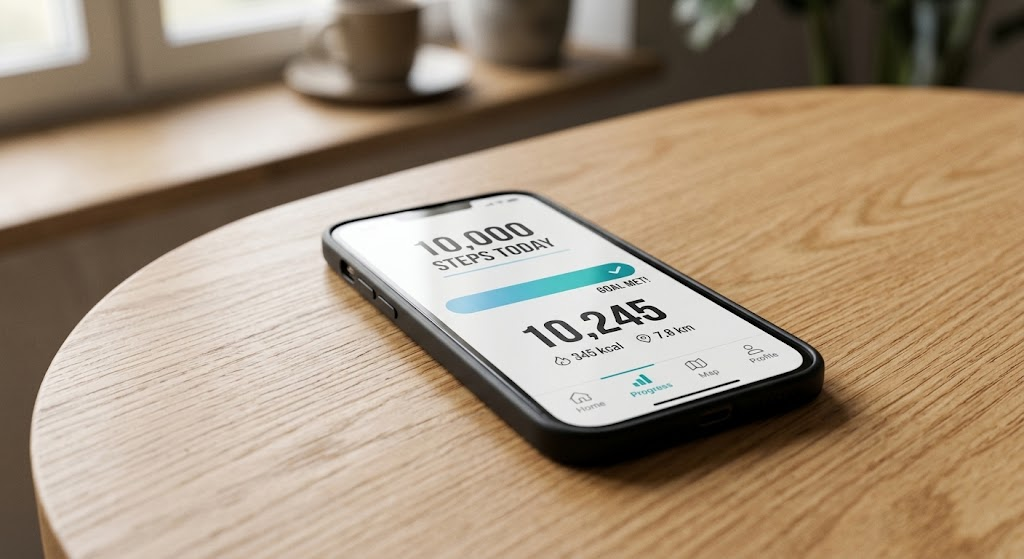
Utilizing dedicated mobile applications simplifies step monitoring and calorie management:
- Fitbit: Tracks daily steps, estimated caloric burn, sleep quality, and food intake across iOS, Android, and desktop interfaces.
- MapMyWalk: Features GPS route mapping, real-time audio coaching, and distance challenges for outdoor walking.
- Argus: Integrates pedometer functions with calorie tracking, a barcode scanner, and sleep monitoring tools.
- Pacer: Offers a straightforward step counter paired with guided workout routines and fitness coaching.
Frequently Asked Questions
1. What should you do if weight loss stops while walking?
If progress stalls, audit your daily NEAT movement. Increase daily steps, schedule standing breaks, and incorporate 10-minute post-meal walks to restore your energy deficit.
2. Is it better to track steps or walking time?
Both methods are effective. You can aim for 7,000 to 10,000 daily steps or simply track 30 to 60 minutes of daily brisk walking.
3. Can you split walking into shorter sessions?
Yes. Accumulating short 10-to-15-minute walks throughout the day or after meals effectively contributes to your daily movement totals.
4. Why do step requirements vary between individuals?
Differences in body weight and walking velocity impact calorie burn per step. Heavier individuals burn more energy per step than lighter individuals at the same pace.
5. How can you ensure steps help with weight loss without counting every step?
If counting steps causes stress, focus on time instead by scheduling 30 to 60 minutes of brisk walking 5 to 6 days per week.