
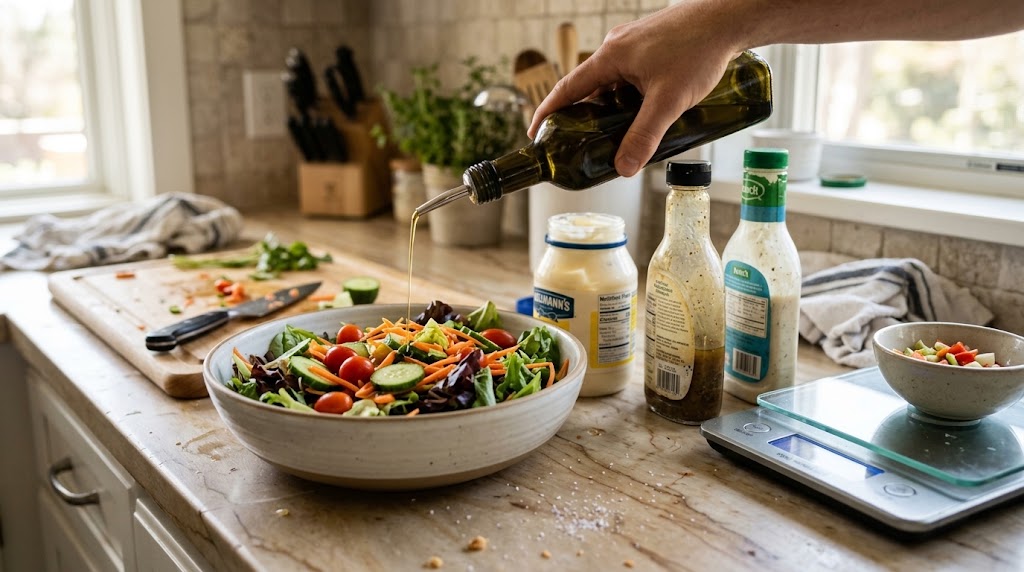
Small, uncounted extras like cooking oils, salad dressings, fancy beverages, and quick bites can add far more energy than you expect. Understanding how hidden calories that sabotage weight loss slip into your daily routine is essential for breaking plateaus and maintaining a steady calorie deficit. In this complete guide, you will learn where calorie creep happens and how to manage your daily intake with confidence. Keep reading to learn more.
Quick Answer
- Track Every Extra: Account for cooking fats, sauces, liquid calories, tasting bites, and casual snacks because they accumulate quickly.
- Measure Calorie-Dense Foods: Use spoons or a digital scale for nut butters, oils, dressings, and dips instead of guessing serving sizes.
- Mind Your Starch Combinations: Be mindful of double carbs, such as combining rice with bread, naan, or chapatis in one meal.
- Make Smart Swaps: Replace heavy spreads with mustard or Greek yogurt, and switch sugary drinks to water or zero-calorie alternatives.
- Focus on Awareness: You do not need to eliminate these items completely—mindful portions and accurate logging are enough.
What Is Calorie Creep?
Calorie creep refers to the subtle, gradual addition of unrecorded energy throughout your day. When looking at hidden calories that sabotage weight loss, small additions like a splash of heavy creamer, a drizzle of olive oil, or a handful of nuts may seem insignificant on their own, but they can easily erase a 300-to-500 calorie deficit.
Why Small Extras Add Up
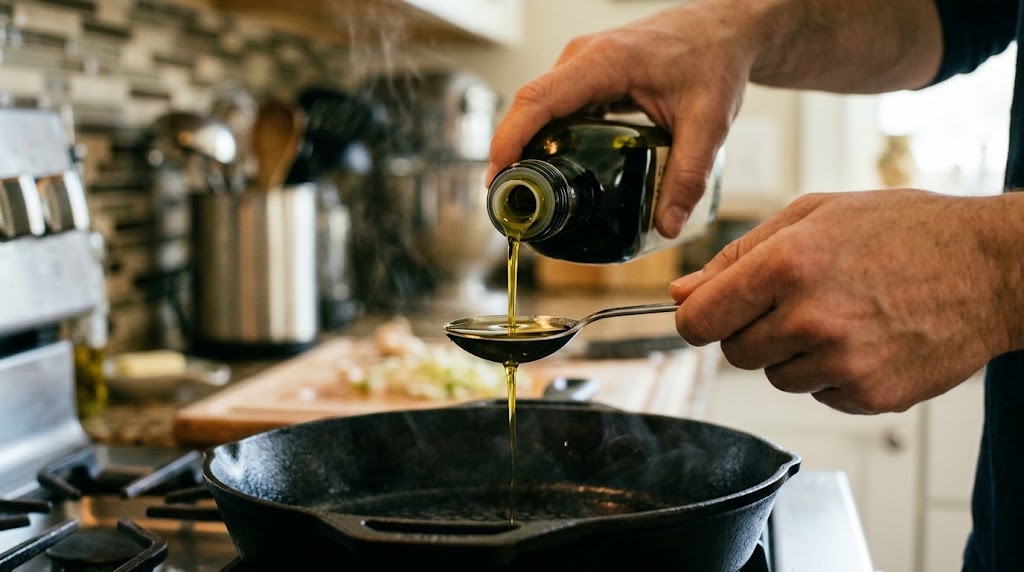
Energy-dense foods contain high calories in small volumes. Free-pouring cooking oil straight from the bottle can double a meal’s energy content without altering its visual size. Similarly, tasting food while cooking or grazing on leftover crusts adds unrecorded energy that stalls fat loss progress.
Why Calorie Creep Is Easy to Miss
Habitual additions often feel harmless. Nutrient-rich choices like avocado, hummus, chia seeds, and extra virgin olive oil carry a “health halo.” While nutritious, these foods are energy-dense and can easily contribute to hidden calories that sabotage weight loss if consumed without portion awareness.
Common Sources of Hidden Calories That Sabotage Weight Loss
Uncounted energy frequently hides in everyday ingredients and preparation habits:
- Cooking Oils and Fats: A single tablespoon of olive oil or butter contains roughly 120 calories. Measuring fats with a spoon rather than pouring freely prevents accidental overconsumption.
- Sauces, Dressings, and Condiments: Mayonnaise, ranch dressing, barbecue sauce, gravies, and creamy dips carry high fat and sugar content.
- Drinks and Liquid Calories: Flavored coffee syrups, fruit juices, sodas, energy drinks, and alcohol deliver calories without promoting satiety.
- Bites, Tastes, and Snacking: Sampling food during meal preparation or snacking on trail mix, dried fruit, and nuts can quickly add hundreds of unlogged calories.
- Calorie-Dense Smoothies: Blending fruit, peanut butter, honey, and whole milk creates a nutrient-dense drink that can exceed 600 calories without feeling like a full meal.
Portion Sizes and Calorie Creep
Portion awareness plays a major role in whether healthy meals support body composition goals or contribute to hidden calories that sabotage weight loss.
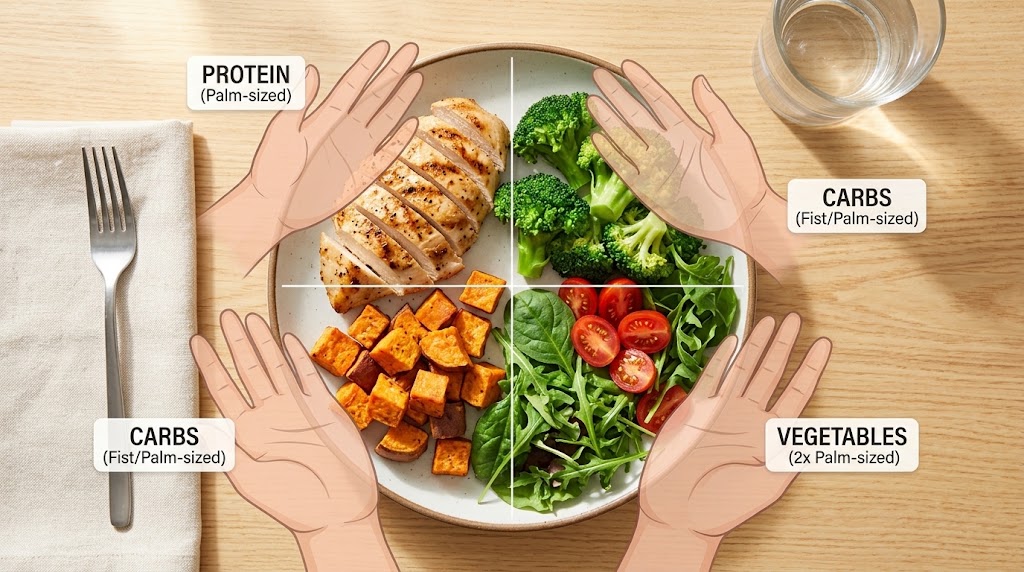
According to dietary guidance from the Academy of Nutrition and Dietetics, using standardized visual cues helps keep portion estimates accurate:
- Starchy Carbohydrates: Aim for a single cupped-hand or palm-sized portion per meal. Combining rice alongside bread, naan, or chapatis doubles carbohydrate density.
- Lean Proteins: Keep portions roughly the size of your palm. Be aware that processed meats contain higher hidden fat levels.
- Vegetables and Fruits: Fill half your plate with fibrous vegetables, which add volume and fullness with minimal energy density.
- Fats and Spreads: Limit butter, oils, and peanut butter to 1–2 measured teaspoons per serving.
How to Stop Hidden Calories From Derailing Your Calorie Deficit
Managing calorie creep does not require strict restriction. Instead, implement these practical habits:
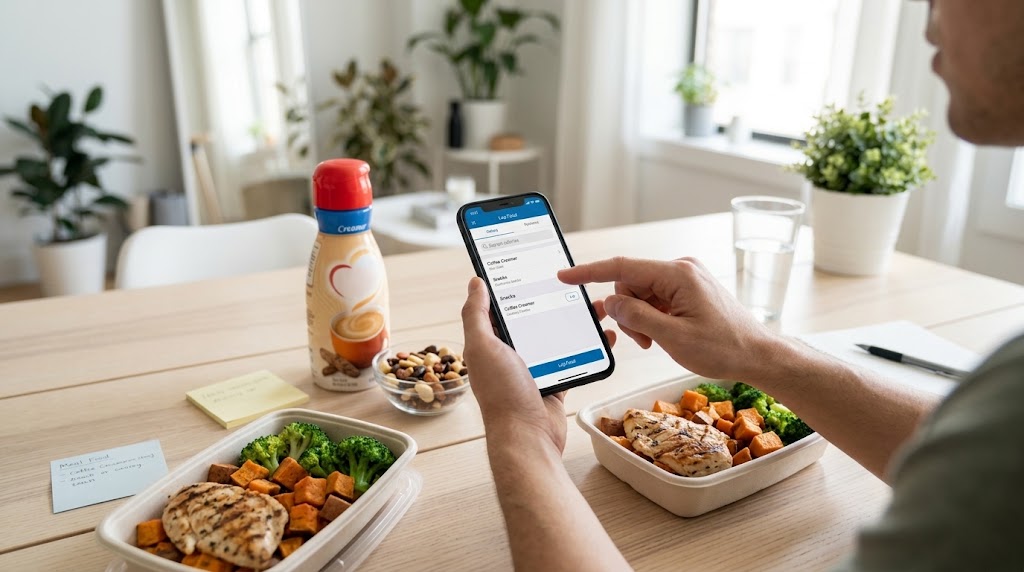
- Log the Extras You Usually Ignore: Record cooking oils, coffee creamers, sauces, and casual bites in your tracking app to maintain accuracy.
- Weigh High-Density Foods: Use a digital kitchen scale for peanut butter, oats, cheeses, and nuts rather than estimating with standard spoons.
- Switch to Lower-Calorie Alternatives: Swap mayonnaise for Greek yogurt or mustard, and use cooking oil spray instead of heavy pours.
- Include Maintenance Periods: If you feel exhausted from constant tracking, research published by Harvard Health suggests taking structured maintenance breaks to reset appetite cues.
- Support Recovery and Sleep: Keep stress low and ensure proper rest. Sleeping less than 6 hours a night spikes hunger hormones, making you more prone to mindless snacking.
Do You Need to Avoid Hidden Calories Completely?
No. Eliminating all calorie-dense foods is neither necessary nor sustainable for long-term health. The goal is to build conscious portion awareness rather than complete avoidance.
By measuring dense ingredients, tracking liquid intake, and understanding how hidden calories that sabotage weight loss enter your diet, you can enjoy flexible meals while making steady, predictable progress toward your body composition goals.
Frequently Asked Questions
1. How can I tell if a food label has a smaller serving than I usually eat?
Compare the manufacturer’s listed serving size in grams or milliliters against the amount you serve onto your plate. If your portion is double the listed size, adjust your calorie count accordingly.
2. Why can the same meal have different calories from one day to another?
Variations in free-poured cooking oils, sauce portions, or salad dressings alter total energy content even when the base ingredients remain identical.
3. What should I check first if my weight loss stalls despite a full food log?
Audit small extras first: cooking oils, coffee add-ins, salad dressings, sauces, condiments, and unrecorded bites taken while cooking.
4. How can I enjoy restaurant meals without overeating?
Ask for dressings and sauces on the side, share large entrees, or box half the meal before you begin eating to keep portions under control.
5. Do healthy foods need to be removed when watching calorie intake?
No. Whole foods like nuts, avocados, and olive oil provide essential nutrients. Simply weigh or measure your portions to ensure they fit within your daily target.