
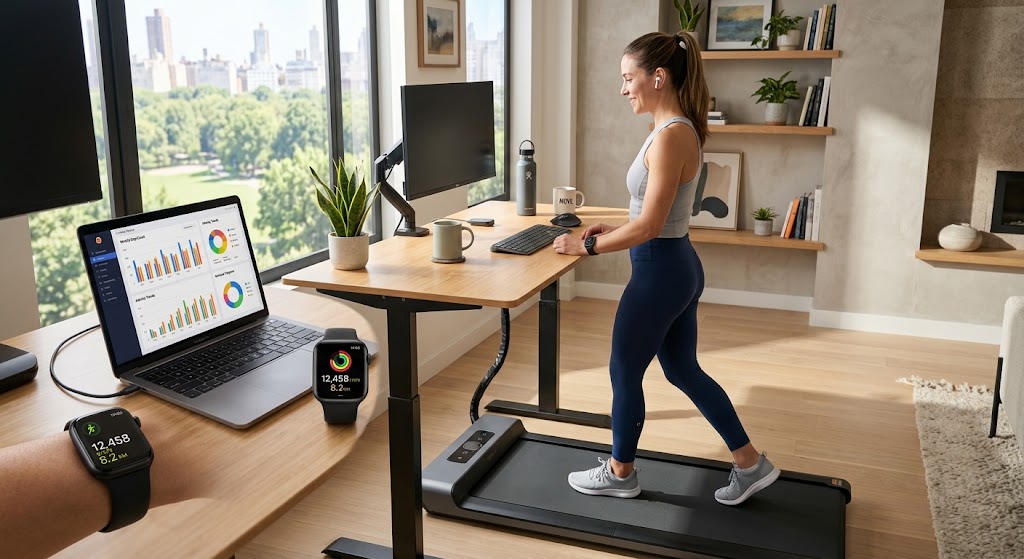
Spending most of your workday seated at an office desk can make reaching an active movement goal feel nearly impossible. However, making subtle adjustments—such as taking short movement breaks, taking phone calls on foot, and choosing stairs over elevators—allows you to accumulate activity without disruption. In this complete guide, you will discover how to increase daily steps with a desk job and build a sustainable routine that fits your work schedule. Read on.
Quick Answer
- Start Realistically: Begin with an achievable daily baseline (such as 5,000 to 6,000 steps) and increase your count progressively rather than forcing 10,000 steps immediately.
- Integrate Micro-Walks: Park farther from entrances, take stairs, pace during non-video calls, and take longer walking routes inside your workplace.
- Break Up Sitting Intervals: Take 2 to 3-minute hourly movement breaks to refresh circulation, improve focus, and reduce lower back strain.
- Utilize Dedicated Blocks: Dedicate 15 to 20 minutes of your lunch hour to an uninterrupted outdoor walk or use an under-desk walking pad during routine typing.
- Focus on Consistency: Support your walking habits with proper footwear, steady pacing, structured hydration, and resistance exercises to avoid burnout.
Why Is It Difficult to Stay Active With a Desk Job?
Prolonged sitting leaves muscles tight, joints stiff, and daily energy low. When you spend eight or more hours bound to an office chair, learning how to increase daily steps with a desk job requires deliberate planning.
According to health guidelines published by the Mayo Clinic, sitting for extended periods without movement breaks is linked to higher body mass index (BMI), elevated blood pressure, and impaired blood sugar regulation. These metabolic delays compound over time, making weight management significantly harder for desk-bound professionals.
Furthermore, an individual who works out for 30 minutes in the morning but remains completely stationary for the remaining 15 waking hours may still suffer from low total daily calorie burn. Actively interrupting sedentary time is essential for long-term health.

10 Simple Ways to Increase Daily Steps With a Desk Job
You do not need to overhaul your entire work schedule to move more. Implementing small, intentional adjustments throughout the workday allows you to increase daily steps with a desk job effortlessly:
- Park Farther Away: If you commute by car, park at the back end of the parking lot to log immediate steps in the morning and evening.
- Exit Public Transit Early: When taking buses or trains, step off one stop ahead of your usual destination and walk the remaining distance.
- Take the Stairs: Bypass elevators whenever traveling under three floors up or five floors down.
- Hydrate Strategically: Refill your water glass at the furthest water dispenser or use a bathroom on a different floor.
- Set Hourly Movement Reminders: Program your smartwatch or phone to vibrate every 50 minutes, signaling a quick 2-minute lap around the office.
- Host Walking Meetings: Shift 1-on-1 catch-ups, brainstorming sessions, or audio-only calls into walking discussions outside or down hallways.
- Commit to a Lunch Walk: Reserve 15 to 20 minutes of your break for a brisk outdoor walk before or after eating.
- Pace During Phone Calls: Stand up and pace around your office or living room whenever taking audio calls.
- Invest in a Walking Pad: Pair an under-desk walking pad with a standing desk to walk at a slow speed (1.0–1.5 mph) while reviewing documents, clearing emails, or attending webinars.
- Take a Post-Work Decompression Walk: Mark the end of your workday with a brief 15-minute neighborhood walk to mentally transition away from work stress.

How Many Steps Should You Aim for Each Day?
An average office worker finishes the day logging between 2,500 and 4,000 steps. You do not need to hit 10,000 steps right away to see health benefits. Choose a starting range that reflects your current activity and build gradually:
- Under 4,000 Steps: Highly sedentary baseline; ideal starting point for incremental increases.
- 5,000 to 7,000 Steps: Moderate activity level that significantly lowers health risks compared to total inactivity.
- 7,500 to 9,000 Steps: Outstanding daily target for desk workers aiming for consistent energy burn and fat loss.
- 10,000+ Steps: Advanced target for highly active individuals with ample schedule flexibility.
If fat loss is your primary goal, aligning your increased activity with a structured dietary plan is key. Read our detailed guide on how to calculate calorie deficit for fat loss to complement your daily step gains.
How to Fit More Walking Into a Busy Schedule
If your calendar is packed with back-to-back tasks, learning how to increase daily steps with a desk job comes down to stacking movement onto existing habits:
1. Turn Calls Into Movement
Take non-video calls on your mobile phone while pacing around your desk, walking in your yard, or strolling through office corridors.
2. Socialize on the Move
Swap sedentary coffee catch-ups or sitting lunches with coworkers for a walking coffee break around the block.
3. Use Post-Meal Walking Breaks
Taking a brief 10-minute walk after lunch aids digestion and helps stabilize blood sugar spikes. As explored in our comparison of three 10 minute walks vs one 30 minute walk, short walks distributed throughout the day yield metabolic benefits equal to one continuous session.
Common Mistakes to Avoid When Increasing Daily Steps
When trying to increase daily steps with a desk job, avoid these common errors to protect yourself from injury or burnout:
- Jumping Targets Too Fast: Increasing your step count from 3,000 to 10,000 overnight can cause shin splints and joint soreness. Increase your target by 500 to 1,000 steps per week.
- Wearing Unsupportive Shoes: Walking thousands of steps in flat dress shoes or worn-out sneakers causes foot strain. Keep a dedicated pair of cushioned walking shoes at your desk.
- Ignoring Posture: Avoid hunching forward while pacing or using a walking pad. Keep your chest open and shoulders relaxed.
- Neglecting Muscle Strength: Pair your daily steps with beginner strength training routines twice weekly to keep your hips, knees, and ankles resilient.
- Skipping Recovery and Sleep: Sleeping less than 6 hours a night impairs muscle recovery, increases systemic inflammation, and lowers physical motivation.
Frequently Asked Questions
1. How can I get 10,000 steps a day with a desk job?
Break the target into smaller segments: walk 15 minutes before work, take a 20-minute lunch walk, pace during phone calls, take hourly stair breaks, and finish with an evening neighborhood walk.
2. How often should I take walking breaks at work?
Aim to stand up and move every 50 to 60 minutes. Even two to three minutes of light pacing keeps blood circulating and prevents muscular stiffness.
3. Do short walks throughout the day count toward my step goal?
Yes. Every step accumulates toward your total daily expenditure. Short 5 to 10-minute bouts offer cumulative cardiovascular and caloric benefits.
4. How can I increase my steps if I work from home?
Utilize an under-desk walking pad, pace around your home during phone calls, do a 10-minute walk before starting work, and take a stroll immediately after shutting down your computer.
5. Is walking enough exercise if I sit at a desk all day?
Walking is an exceptional foundation for daily calorie burn and cardiovascular health. However, combining walking with resistance exercise twice a week ensures long-term muscle preservation and joint stability.