
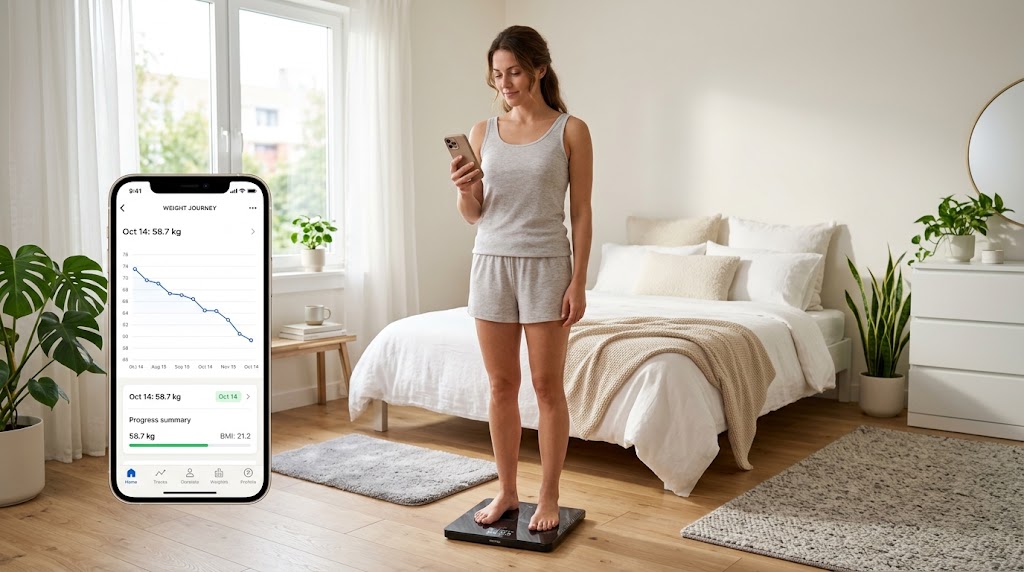
Seeing your weight go up overnight while dieting can be frustrating, especially when you have been sticking closely to your meal plan. However, a sudden spike on the scale rarely means you have gained body fat. In this guide, we explore why your weight go up overnight while dieting, how fluid shifts impact your daily scale readings, and how to track genuine fat loss with confidence. Read on.
Quick Answer
- Water Weight, Not Fat: An overnight scale spike is almost always driven by water retention, glycogen storage, digestion, or hormonal fluctuations.
- Sodium and Carbs Matter: Eating a higher-sodium meal or increasing carbohydrate intake causes your body to hold extra water weight temporarily.
- Weigh Under Consistent Conditions: Step on the scale first thing in the morning after using the bathroom and before eating or drinking.
- Focus on Long-Term Trends: Compare 7-day average scale numbers over several weeks rather than overreacting to single-day fluctuations.
- Avoid Extreme Restrictions: Do not slash calories, skip meals, or cut out food groups because of a single morning weight jump.
Why Did My Weight Go Up Overnight While Dieting?
When you observe your weight go up overnight while dieting, it is crucial to remember that a bathroom scale measures your entire body weight—including muscle mass, bone density, water, digestive volume, and organ tissue—not just fat mass.
According to metabolic research from Harvard Health, gaining a single pound of true body fat requires consuming roughly 3,500 calories above your maintenance level. Therefore, gaining two or three pounds of actual fat in a single 24-hour period is physically impossible under standard eating conditions.
Common Reasons Your Weight Is Higher the Next Morning
If you are trying to figure out why your weight go up overnight while dieting, several temporary physical and metabolic factors are usually responsible:
1. Sodium-Induced Water Retention
Consuming high-sodium meals or processed foods causes your kidneys to temporarily retain extra fluid to maintain internal electrolyte balance. This water accumulation can easily add 1 to 3 pounds to the scale by the following morning.
2. Carbohydrate Intake and Glycogen Storage
When you consume carbohydrates, your body stores them as glycogen in your liver and skeletal muscle tissue. Each gram of stored glycogen binds to approximately 3 to 4 grams of water. Increasing carb intake fills glycogen stores, pulling fluid into muscle cells and causing a temporary scale increase.
3. Undigested Food and Fluid Volume
A late-night dinner or heavy meal remains inside your stomach and intestines during morning weigh-ins. Until food fully passes through your digestive tract, its physical weight registers directly on the scale.
4. Irregular Bowel Movements
Changes in fiber intake, stress levels, travel, or minor dehydration can slow gut motility. Skipping a regular daily bowel movement means stored stool remains in the colon, artificially raising your body weight.
5. Muscle Inflammation from Exercise
Intense weight training or heavy cardiovascular exercise creates micro-tears in muscle fibers. As part of the natural recovery process, your body sends repair fluids and inflammation to those muscles, temporary increasing water weight.
6. Hormonal Fluctuations and Menstrual Cycles
Hormonal changes significantly impact fluid retention. Clinical studies published by the National Institutes of Health (NIH) show that water retention peaks during the first day of menstrual flow and drops during mid-follicular phases.

How to Know Whether You Gained Water Weight or Body Fat
Distinguishing between temporary water retention and real fat gain becomes straightforward once you understand how each develops over time:
- Check Rate of Change: True fat gain occurs slowly across several weeks when you consistently consume more calories than your TDEE. Sudden overnight spikes are almost exclusively water mass.
- Perform a Pitting Test: Gently press a thumb against your lower shin or ankle for a few seconds. If a temporary indentation remains before smoothing out, you are holding excess subcutaneous fluid.
- Track Body Measurements: Measure your waist circumference weekly. If your scale weight rises overnight but your waist measurement remains stable, the increase is fluid retention.
- Review Recent Meals: Look back at yesterday’s nutrition. A late restaurant meal, higher salt intake, or alcoholic beverage will predictably elevate morning fluid levels.

How to Weigh Yourself While Dieting
To prevent anxiety when your weight go up overnight while dieting, standardize your weigh-in routine to collect accurate data:
- Maintain Consistent Weigh-In Conditions: Step on the scale immediately after waking up and using the restroom, before consuming water or food. Wear minimal, similar clothing each time.
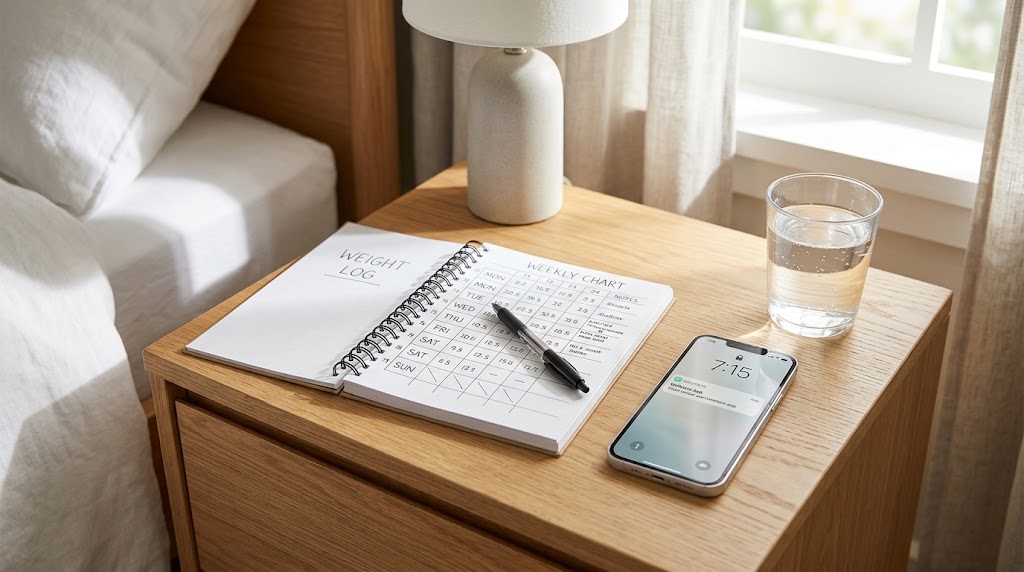
- Calculate Weekly Averages: Record your weight daily or 3 to 4 times a week, then calculate the weekly average. Compare week-over-week averages to evaluate actual fat loss.
- Cross-Check with Caloric Deficit Targets: Ensure your daily nutrition aligns with proper targets. Review our guide on how to calculate calorie deficit for fat loss to ensure your energy gap remains accurate.
Should You Change Your Diet After an Overnight Weight Increase?
When you see your weight go up overnight while dieting, avoid making rash adjustments to your nutrition. Dropping your caloric intake drastically, skipping meals, or cutting out entire macro groups raises stress hormones like cortisol, which further increases fluid retention.
Instead, follow these sensible steps:
- Drink Plenty of Water: Increasing fluid intake signals your body that water is abundant, encouraging your kidneys to release retained fluid.
- Increase Potassium Intake: Consume potassium-rich foods such as spinach, bananas, and avocados to help balance high sodium levels.
- Prioritize Sleep and Recovery: Ensure you are getting adequate rest. Sleeping less than 6 hours a night disrupts hormonal balance, exacerbating fluid retention and hunger pangs.
- Keep Moving: Incorporate light cardio or walking. Check our comparison on three 10 minute walks vs one 30 minute walk to stay active without overstressing your body.
Frequently Asked Questions
1. Is it normal for weight go up overnight while dieting?
Yes, overnight fluctuations of 1 to 5 pounds are completely normal and primarily driven by water, sodium, glycogen stores, and digestive content.
2. Can you gain real fat overnight in a calorie deficit?
No. If you are genuinely eating below your daily maintenance calories, gaining real body fat overnight is biologically impossible.
3. How long does water weight take to go away?
Temporary water retention usually subsides within 24 to 72 hours as your sodium levels balance, glycogen normalizes, and digestion progresses.
4. How much can daily scale weight fluctuate naturally?
Daily weight can shift by 2 to 5 pounds due to hydration levels, salt consumption, stress, bowel movements, and exercise recovery.
5. Should I cut calories if my weight goes up overnight?
No. Stick to your planned caloric deficit and evaluate your average trend over 2 to 4 weeks before making any nutritional changes.