

Many people work hard to eat healthily from Monday through Friday, only to find their fat loss stalling. Understanding how weekend eating affects a weekly calorie deficit is essential for maintaining steady progress. A few extra snacks, restaurant meals, or drinks over the weekend can quickly erase the calorie shortfall you built during the week. In this guide, we break down how weekend calories add up and how to enjoy your weekends without losing your progress. Read on.
Quick Answer
- Weekly Balance Matters: Weight loss relies on your total weekly energy intake rather than a single isolated day. Extra weekend calories can significantly reduce or eliminate your weekday deficit.
- Track Hidden Extras: Log food consistently across all seven days, including restaurant meals, high-calorie drinks, desserts, and casual weekend grazing.
- Budget Ahead: Plan higher-calorie social meals within your weekly allowance while keeping portion sizes reasonable and meals balanced.
- Avoid Extreme Restriction: Saving a small buffer of 100 to 200 calories on weekdays can create flexibility, but skipping meals often leads to weekend bingeing.
- Resume Your Routine: Following a higher-calorie meal or weekend event, return to your normal eating habits immediately instead of using severe restrictions.
Why Weekly Calorie Balance Matters More Than One Day
Fat loss is governed by cumulative energy balance over time. While individual daily targets help maintain consistency, your body registers total caloric intake across the entire week. Consistently following a calorie deficit for five days creates a solid energy gap, but consuming significant extra calories on Saturday and Sunday can quickly absorb that buffer.
How Quickly Extra Weekend Calories Add Up
Understanding how weekend eating affects a weekly calorie deficit starts with looking at subtle daily habits. An extra 300 to 500 calories on Saturday and Sunday—from larger portion sizes, cooking oils, or alcoholic beverages—adds 600 to 1,000 unrecorded calories to your week.
Furthermore, weekends often disrupt regular schedules. Unstructured wake-up times, delayed lunches, and casual grazing mean meals are less predictable. Coupled with social gatherings, these factors make overeating easy to overlook, often neutralizing weekday progress by Monday morning.
Common Weekend Eating Habits That Reduce Your Calorie Deficit
Without the structure of a work routine, several common habits can quietly increase your energy intake:
- Treating Weekends as Unlimited Breaks: Relaxing diet rules entirely or eating minimal food during the week to save calories often triggers intense hunger and weekend overeating.
- Unmeasured Restaurant Meals: Commercial kitchens frequently use heavy oils, butter, and dressings, making restaurant dishes far more calorie-dense than home-cooked equivalents.
- Liquid Calories and Casual Snacks: Sugary coffee drinks, alcoholic beverages, appetizers, and late-night snacks add substantial calories without offering lasting satiety.
- Skipping Food Tracking: Stopping meal logs on Friday evening makes it difficult to recognize how weekend eating affects a weekly calorie deficit accurately.

How to Calculate Your Weekly Calorie Deficit
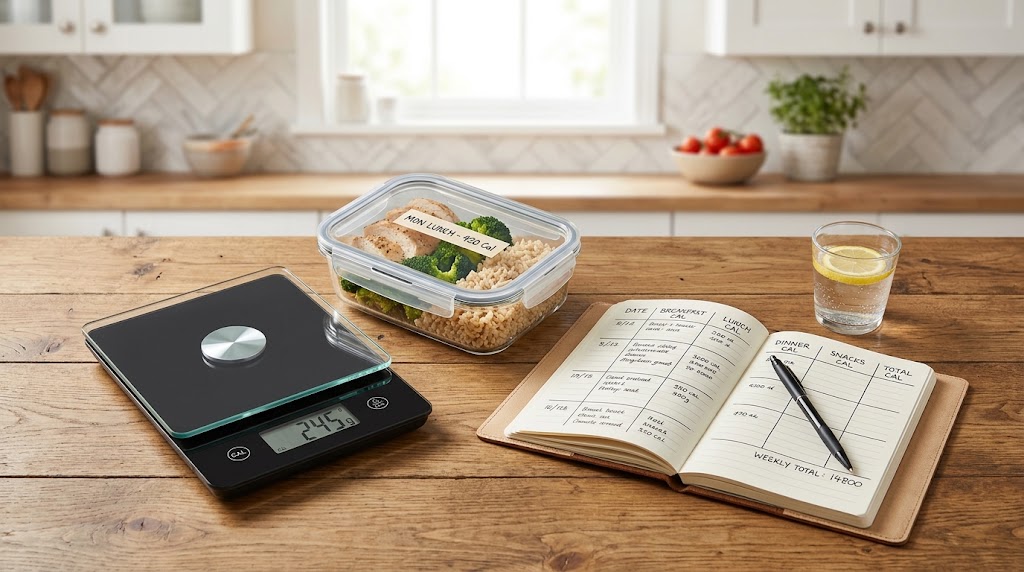
To evaluate your overall progress, calculate your total intake across seven days rather than focusing on daily snapshots.
1. Sum Your Total Weekly Calories
Record your food intake daily across the full week. Add all seven daily totals together to calculate your true weekly caloric intake.
2. Compare Weekly Intake to Your TDEE
Determine your Total Daily Energy Expenditure (TDEE) and multiply it by seven to find your weekly maintenance baseline. Subtract your total weekly intake from your weekly maintenance number to calculate your net deficit. To learn how to determine your baseline numbers, read our step-by-step guide on how to calculate calorie deficit for fat loss.
Safety Guideline: Never drop below 1,200 calories per day for women or 1,500 for men without medical supervision. Excessive restriction risks muscle breakdown, fatigue, and nutritional shortfalls.
3. Track Weight Trends over Time
Scale weight fluctuates daily due to water retention, salt, and digestive volume. Compare weekly weight averages across 3 to 4 weeks to evaluate actual fat loss trends.
How to Enjoy the Weekend Without Losing Your Calorie Deficit
You can maintain flexibility on weekends while protecting your fat loss progress by using practical structural strategies:
- Plan High-Calorie Social Meals: Review menus ahead of time and choose where you want flexibility, such as selecting an entree while keeping drinks or desserts moderate.
- Practice Portion Control: Enjoy your favorite meals by splitting large restaurant portions or keeping side dishes lighter.
- Maintain Core Structure: Anchor your weekend days with a high-protein breakfast, daily step goals, and adequate hydration. Combine this movement with three 10 minute walks vs one 30 minute walk to keep daily energy burn high.
- Return to Normal Habits Immediately: After a heavier meal, resume your standard meal plan at the next scheduled eating time rather than skipping meals.
Should You Save Calories During the Week for the Weekend?
Banking calories can offer flexibility for social events, but it requires balance. Reducing daily intake by a modest 100 to 200 calories from Monday through Friday creates a 500 to 1,000-calorie cushion for the weekend.
However, cutting weekday calories too severely creates a restrictive pattern that often triggers uncontrolled overeating. Instead of extreme restriction, combine moderate calorie banking with nutrient-dense, high-protein meal options during the week to maintain satiety.
Remember that all calories count toward your weekly total. Managing weekend intake with moderate structure ensures steady long-term results without feeling overly restricted.

Common Weekend Errors to Avoid
- Adopting an All-or-Nothing Mindset: Viewing one larger meal as a complete failure often leads to uncontrolled overeating for the rest of the weekend.
- Neglecting Strength Training: Skipping workouts over the weekend reduces overall physical activity. Keep up with beginner weight training routines to support muscle retention.
- Overlooking Rest and Recovery: Staying up late and drinking alcohol disrupts sleep. Remember that sleeping less than 6 hours a night spikes hunger hormones and increases water retention.
Frequently Asked Questions
1. Can one weekend of overeating ruin a calorie deficit?
It depends on total caloric intake. Consuming a large excess over several days can erase a small weekly deficit, but returning to your normal routine quickly limits the impact.
2. How many calories can I eat on the weekend and still lose weight?
There is no universal number. As long as your total weekly calorie intake remains lower than your total weekly maintenance needs, you will continue losing fat.
3. Should I eat fewer calories during the week to make up for weekend eating?
Saving a small daily buffer of 100 to 200 calories can provide helpful flexibility. However, cutting calories drastically during the week increases extreme hunger and overeating risks.
4. Why does my weight increase after a high-calorie weekend?
Immediate post-weekend scale spikes are usually caused by fluid retention from sodium, glycogen storage from carbohydrates, and digestive volume rather than direct body fat gain.
5. Can I have a cheat meal and still maintain a weekly calorie deficit?
Yes. A flexible meal fits easily into a weekly calorie target as long as your total weekly energy intake remains below your maintenance baseline.