
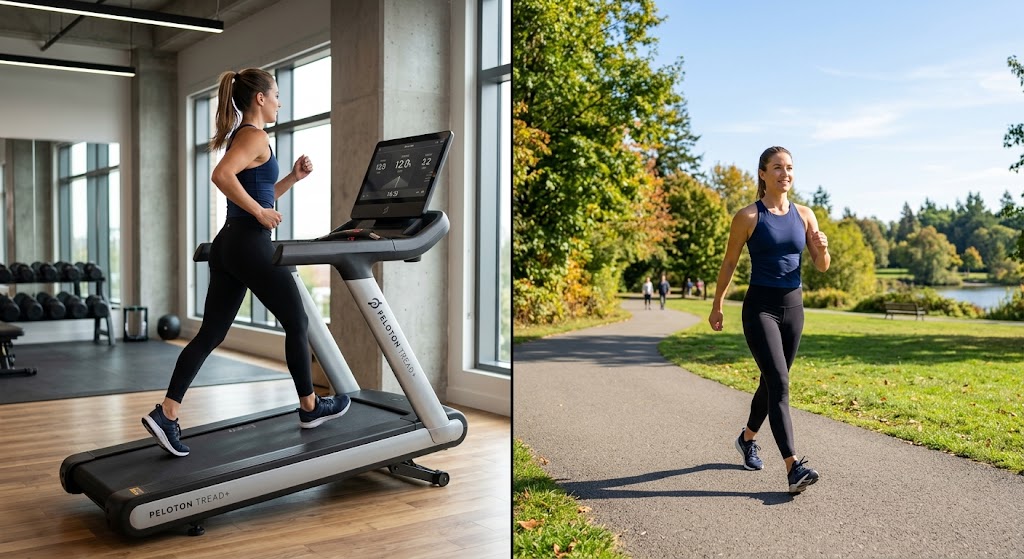
Struggling to decide whether flat walking or incline walking is better for weight loss? Finding the right mix of pace, time, and incline can make your walking routine more effective and easier to maintain long term. In this guide to incline walking vs flat walking, we break down calorie burn differences, muscle activation, and a structured beginner plan to help you pick the best strategy. Read on.
Quick Answer
- Higher Calorie Expenditure: Incline walking burns more calories than flat walking at the same speed because it forces your lower body to work against gravity.
- Beginner-Friendly Start: Flat walking places less immediate strain on your joints and muscles, making it the ideal starting point for building initial stamina.
- Progressive Overload: Begin with flat terrain and gradually add gentle inclines, outdoor hills, or short brisk intervals as your fitness improves.
- Consistency Wins: Sustainable weight loss depends on choosing the walking schedule you can perform regularly without burnout.
How Walking Supports Weight Loss
Walking is one of the most sustainable forms of physical activity for long-term weight management. It increases your daily caloric burn without causing the intense physical fatigue or extreme appetite spikes often triggered by high-intensity workouts.
Calorie Burn and Pacing
Calorie expenditure during a walk depends heavily on body weight and movement speed. A gentle 2 mph stroll burns roughly 3 to 4 calories per minute, whereas a brisk 3.5 mph pace burns about 4.6 to 6.4 calories per minute. Increasing your speed to 4 mph raises calorie burn to 5.2–7.2 calories per minute.
Weekly Time Commitment Guidelines
General health guidelines recommend at least 150 minutes of moderate activity weekly. For target fat loss, guidelines from the American College of Sports Medicine suggest aiming for 225 to 250 minutes per week, which translates to roughly 45 minutes of brisk walking five days a week.
Metabolic Benefits and Visceral Fat Loss
Increasing daily step counts directly correlates with lower levels of visceral abdominal fat. Furthermore, taking brief 2-to-5-minute walks immediately after meals helps regulate postprandial glucose levels and improves insulin sensitivity.

Incline Walking vs. Flat Walking: What Is the Difference?
When comparing incline walking vs flat walking, the fundamental distinction lies in how the surface angle alters mechanical workload and muscle recruitment.
What Is Flat Walking?
Flat walking occurs on level ground and emphasizes horizontal propulsion. It relies on a faster leg turnover and higher cadence. The quadriceps and hip flexors perform most of the work to pull the body forward, making it an excellent way to build steady cardiovascular endurance with natural biomechanics.
What Is Incline Walking?
Incline walking involves moving at an elevated grade, forcing the body to lift its own mass upward against gravity. This extra resistance heavily recruits the posterior chain—specifically the glutes, hamstrings, calves, and soleus muscles—while expanding ankle range of motion.
How Elevation Increases Workout Intensity
Walking uphill places greater metabolic demand on the cardiovascular system. At identical speeds, incline walking can burn approximately 60% more calories than walking on a flat surface. Every degree of incline increases gravitational resistance, elevating heart rate and oxygen consumption.
Incline Walking vs. Flat Walking for Weight Loss
Both modalities can be integrated into an effective fat-loss routine. Determining which is superior depends on your starting fitness level, personal goals, and fatigue recovery.
Calorie Burn and Physical Effort
Incline walking demands greater muscular energy because each step lifts your weight vertically. For instance, a 70 kg (155 lb) individual walking at 3 mph for 30 minutes burns approximately 115 calories on a flat treadmill belt, but around 230 calories when set to an 8% incline.
Flat walking yields a lower calorie burn per minute but causes less localized muscle soreness, allowing you to walk for longer durations or more days per week.
Consistency and Long-Term Sustainability
Weight loss requires maintaining a consistent caloric deficit over several months. To ensure your nutrition matches your activity level, refer to our step-by-step guide on how to calculate calorie deficit for fat loss.
Flat walking is well-suited for absolute beginners, individuals recovering from joint strain, or those looking to move daily without severe fatigue. Incline walking works best for people who want a greater lower-body challenge without the high-impact stress of running.
Benefits of Incline Walking for Beginners
When evaluating incline walking vs flat walking, walking uphill offers unique physical advantages:
- Higher Metabolic Output: Raises heart rate and calorie expenditure without requiring a fast running pace.
- Posterior Chain Activation: Strengthens the glutes, hamstrings, calves, and core stabilizers.
- Low Joint Impact: Delivers high cardiovascular intensity while remaining far gentler on knees and ankles than jogging.
- Improved Functional Stamina: Enhances breathing efficiency, lung capacity, and bone density over time.

Benefits of Flat Walking for Beginners
Flat walking provides essential health benefits that make it an indispensable foundation for long-term health:
- Reduced Muscle Soreness: Minimizes joint pain and lower-back strain while building foundational stamina.
- Mood and Mental Clarity: Triggers the release of endorphins, serotonin, and dopamine to relieve daily stress.
- Enhanced Sleep Quality: Morning outdoor walks help align your circadian rhythm for deeper sleep. For more lifestyle factors affecting weight, read about sleeping less than 6 hours a night effects.
- Immune and Heart Health: Regular brisk flat walking improves circulation, reduces cardiovascular risks, and supports healthy blood pressure.
How Beginners Can Choose the Right Walking Workout
To safely transition into a regular walking habit, follow these practical steps:
- Assess Current Fitness: Start at a comfortable, conversational pace. Establish baseline weekly time targets before adding speed or incline.
- Increase Intensity Gradually: Once flat walking feels easy, introduce mild outdoor hills, a 1%–3% treadmill incline, or short 1-minute brisk intervals.
- Incorporate Resistance Training: Pair your cardio with beginner strength training routines