

Seeing the scale go up before or during your period can feel frustrating when you are trying to lose weight. A few simple tracking habits can help you understand these changes. In this guide, you will learn how to track weight loss progress during the menstrual cycle and focus on long-term trends instead of temporary weight shifts. Read on.
Quick Answer
- Log Consistently: Track your body weight and menstrual cycle day regularly to spot normal fluid patterns and measure long-term progress.
- Compare Equivalent Days: Compare your scale weight on the exact same cycle days each month, particularly around days 6–8 when bloating subsides.
- Understand Water Shifts: Remember that temporary water retention, bloating, increased cravings, and slowed digestion can cause short-term weight increases before your period.
- Focus on Trends: Evaluate weekly or monthly weight averages instead of reacting to daily scale fluctuations that do not reflect actual fat changes.
- Maintain Routine: Keep your eating habits and exercise schedule consistent, avoiding drastic calorie cuts due to temporary hormonal fluctuations.
Why Your Weight Changes Throughout the Menstrual Cycle
Weight fluctuations during the monthly cycle are completely normal. When you track weight loss progress during the menstrual cycle, remember that a sudden rise on the scale often stems from temporary water retention rather than body fat gain.
Hormonal Changes and Water Retention
During the luteal phase, elevated progesterone levels can prompt your body to hold onto extra sodium and water. This biological shift can cause bloating, physical swelling, and a temporary weight increase of about two to six pounds, which typically drops within days of menstruation starting.
Bloating, Digestion, and Appetite Changes
Progesterone can amplify hunger and trigger intense cravings for calorie-dense foods, sweets, and carbohydrates. It can also slow gastrointestinal motility, leading to mild fullness or discomfort. These combined factors frequently influence scale readings before your period begins.
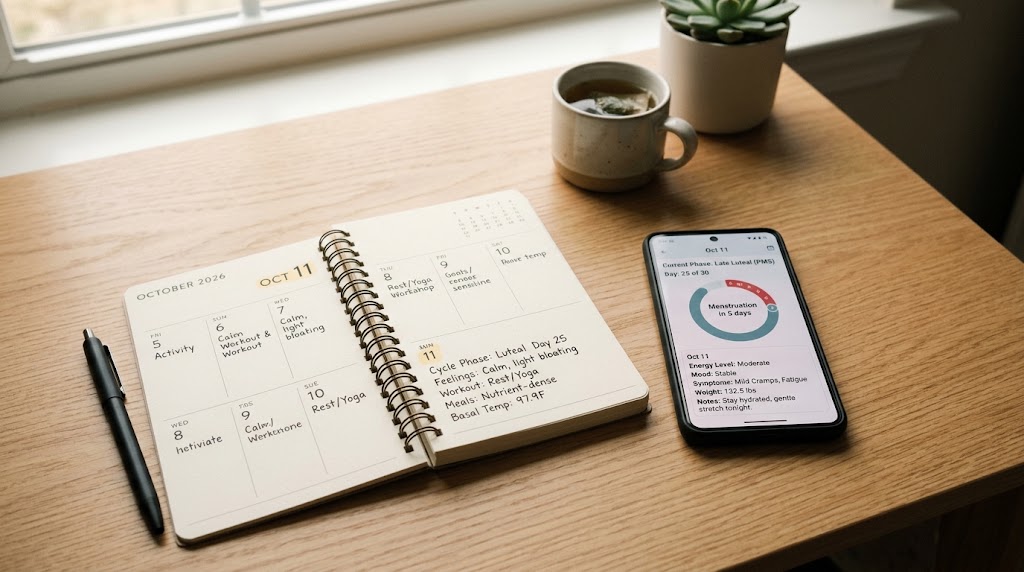
When Menstrual Weight Fluctuations Usually Occur
An average menstrual cycle spans roughly 28 days and encompasses four distinct phases:
- Menstruation Phase: Lasts three to seven days while the uterine lining sheds.
- Follicular Phase: Begins after bleeding stops and runs until ovulation around day 14, where rising estrogen can promote slight weight stability or loss.
- Ovulation Phase: Occurs near day 14 as a mature egg releases alongside peak luteinizing hormone and surging estrogen.
- Luteal Phase: Extends from ovulation until the next period, characterized by rising progesterone, fluid retention, increased appetite, and temporary weight gain.
How to Track Weight Loss Progress During the Menstrual Cycle
To accurately track weight loss progress during the menstrual cycle, you must record your weight alongside your exact cycle day. Comparing similar points in consecutive cycles helps you filter out noise.
Weigh Yourself Under Consistent Conditions
While you can step on the scale daily, comparing the identical cycle day each month provides the clearest picture. For instance, evaluate Day 12 of your current cycle against Day 12 of the previous one. The week immediately following your period is typically the most stable measurement window.
Record Your Weight and Menstrual Cycle Day
Maintain a log of your weight and cycle day every time you weigh yourself. Over time, this highlights predictable patterns where your weight shifts by 1 to 5 pounds, rising pre-menstrually and dropping post-menstrually while remaining steady around ovulation.
Which Menstrual Cycle Phases Are Best for Comparing Weight?
Evaluating progress becomes easier when you compare your weight during matching phases across consecutive monthly cycles.
Understanding Why the Scale Fluctuations Occur Across Your Cycle
- Before Your Period: Hormonal shifts, fluid retention, cravings, and sluggish digestion push scale numbers up.
- During Your Period (Days 1–5): Water retention and physical bloating usually peak around the onset of menstruation.
- After Your Period: Fluid retention drops significantly around days 6–8, offering a much more stable weight baseline.
The Best Windows for Accurate Weight Comparisons
Use these simple tracking methods to maintain clarity:
- Compare Matching Cycle Days: Check your weight on day 7 or 8 against the same day last month to minimize fluid distortion.
- Watch Multi-Day Averages: Daily weigh-ins help map normal curves, but focus primarily on weekly or monthly moving averages.
- Utilize Post-Period Windows: Use the days right after your period ends to evaluate true body weight changes as bloating fades.
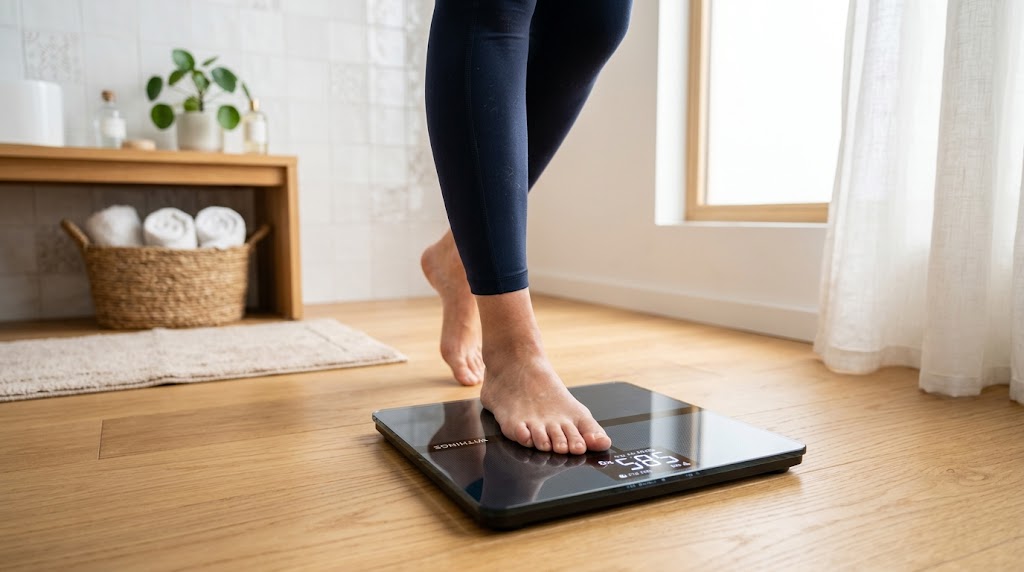
Common Mistakes to Avoid When Trying to Track Weight Loss Progress During the Menstrual Cycle
When you track weight loss progress during the menstrual cycle, avoid these frequent missteps to prevent unnecessary frustration:
- Relying Solely on Daily Scale Numbers: Daily readings fluctuate due to hormones and sodium. Do not panic over short-term spikes.
- Comparing Today to Last Week: Comparing weights across entirely different cycle phases creates false impressions of progress or regression.
- Ignoring Water Retention: Mistaking pre-period fluid shifts for a fat loss plateau leads to counterproductive diet changes.
- Overreacting to Cravings: Giving in to luteal phase carb cravings can spike water storage temporarily through glycogen replenishment.
- Overlooking Bowel Regularity: Pre-menstrual constipation frequently adds temporary weight on the scale.
- Drastically Changing Calories: Avoid sudden, extreme calorie cuts in response to temporary hormonal weight shifts.
- Skipping Workouts: If exercise feels harder during menstruation, adjust intensity rather than abandoning your routine entirely.
- Neglecting Month-to-Month Comparisons: Always compare corresponding phases rather than random calendar weeks.
- Overlooking Sodium Intake: Salty foods compound menstrual bloating and exaggerate scale increases.
- Forgetting Weight Loss Is Non-Linear: Normal weight shifts of 3 to 5 pounds happen frequently; focus on long-term downward trends.
When Should You Be Concerned About Menstrual Weight Changes?
Minor weight shifts throughout your cycle are completely normal. When you track weight loss progress during the menstrual cycle, focus on multi-month trajectories rather than individual data points.
A slight increase of several hundred grams up to a kilogram typically reflects normal hormonal and water balance adjustments rather than body fat accumulation. However, if your baseline weight climbs continuously across multiple consecutive cycles despite stable habits, a review of your nutrition and lifestyle may be warranted.

Frequently Asked Questions
1. Should I stop weighing myself during my period?
No, you can continue weighing yourself. Because hormonal shifts cause temporary water retention, higher numbers do not indicate fat gain. Focus on overall trends.
2. How many days before my period does weight usually increase?
Weight typically starts drifting upward three to seven days before bleeding begins due to water retention and slower digestion, dropping shortly after your period starts.
3. Should I compare my weight month to month or week to week?
Monthly comparisons at the exact same point in your cycle offer the most accurate view of your fat loss progress by neutralizing hormonal fluid variances.
4. Can I lose fat even if my weight increases before my period?
Yes. Body fat loss can occur even when temporary water retention masks the scale number. Maintain your routine and check measurements after bloating subsides.
5. How long should I wait after my period to check my true weight?
Readings stabilize as water weight clears. Weighing yourself around days 6–8 of your cycle provides a reliable baseline for monthly comparisons.