
You have probably seen those reels on social media in which a person claims they lost fat by walking 10,000 steps a day. But is there any truth behind such claims? Can you really lose fat by walking 10000 steps a day? Let’s see what the research has to say.
Quick Answer
- Walking definitely helps you burn calories.
- The number of calories you burn depends on your weight and how fast you walk.
- Walking strengthens your bones and muscles, improves blood sugar control, & lowers stress.
- If you have any injuries, discuss them with your doctor before jumping into a new exercise routine.
How Does Walking Help With Belly Fat Loss?
Increasing Your Daily Calorie Burn
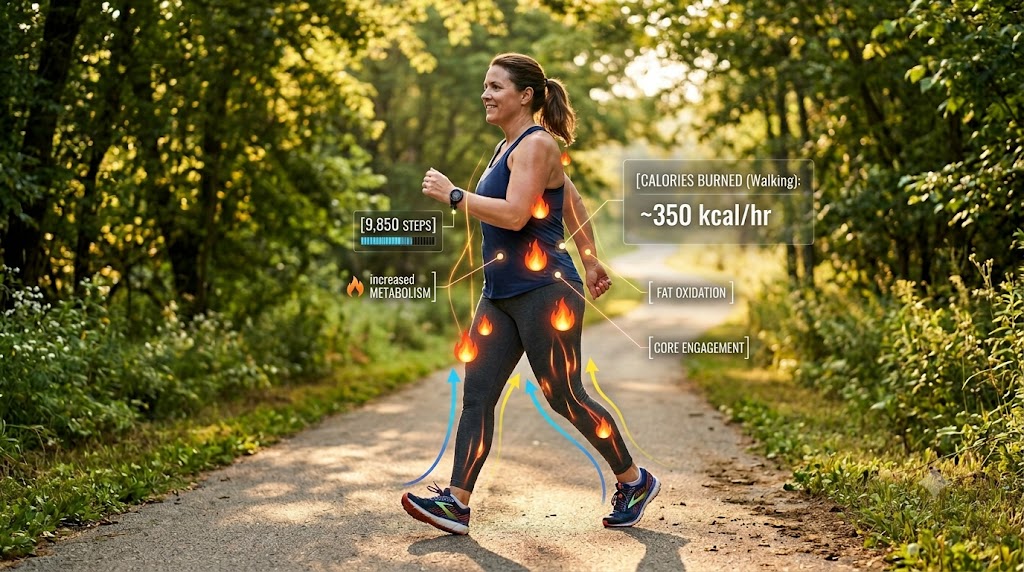
Losing fat by walking is relative to your weight and speed. For example, the bigger the vehicle, the more fuel it consumes, the faster it goes, the faster it runs out of fuel. Similarly, someone who is weighing only 120 pounds might only burn around 300 calories. On the other hand, a person weighing 210 pounds could lose around 500 calories.
Belly Fat Is Lost Only Through Overall Fat Loss
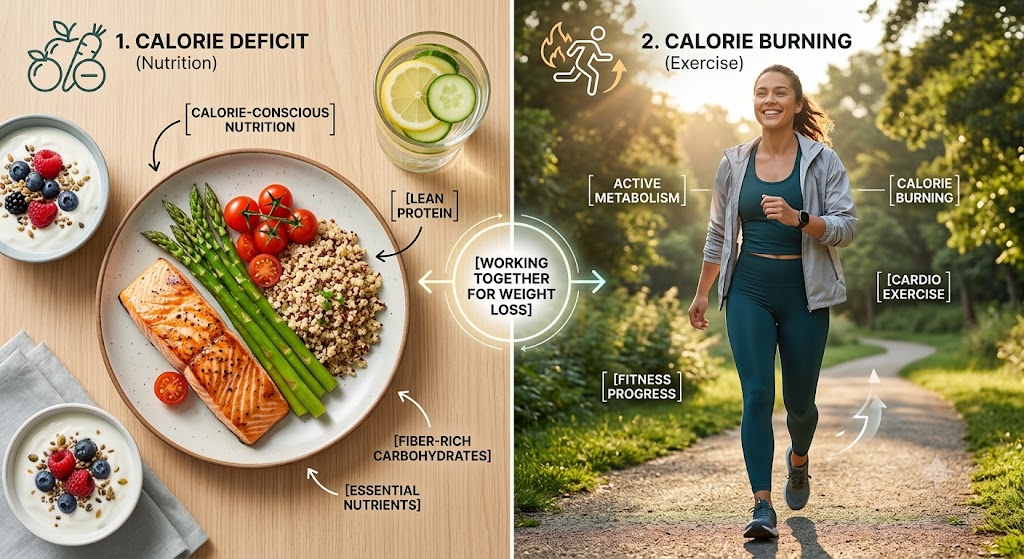
The social media preaches 10000 steps as some sort of mystical number that will automatically make you lose fat. The truth is a bit complicated. You can only lose fat by walking if you are also in a calorie deficit. Which means you are eating fewer calories than you are burning. If you don’t keep a calorie deficit, meaning you eat more calories than you burn, then walking won’t help you lose weight.
Power Of Consistency
One thing that will really help with fat loss is staying consistent with diet and exercise. Consistency helps you meet the goal of 150 minutes of weekly aerobic activity. Consistently stacking brisk walks elevates your heart rate, which improves your mood and health.
Is Weight Loss Through Walking Possible?
How Many Calories Does 10,000 Steps Burn?
Here is the breakdown of how much weight you can lose depending on your stride, weight, and pace if you walk 10k steps daily.
- 120 lbs (54.4 kg): Roughly 250–300 calories.
- 155 lbs (70.3 kg): Roughly 350–400 calories.
- 185 lbs (83.9 kg): Roughly 400–450 calories.
Factors That Affect Your Results
- Your weight, your height, the length of your stride.
- Your pace and how quickly you can walk from point A to B.
- Your age, fitness level, and overall consistency.
Why Diet Matters More Than Steps
Calorie Deficit
Think of it this way, burning calories by exercise is always harder than restricting calorie intake. Even if you work out for 45 minutes, you might only end up burning just 400 calories. While all the hard work that you did in the gym can be easily lost if you eat a muffin. So, to lose fat, you must remain in a calorie deficit. That’s why paying attention to your diet is extremely important.
Eating Habits That Slow Progress
Compensatory eating is the biggest obstacle to weight loss. Most people, after joining an exercise program, experience increased hunger. Many gym goers feel justified treating themselves to their favourite meal after a workout. However, such a treat increases the overall calorie intake, stalling your progress.
Nutrition Tips to Support Walking for Weight Loss
- If you don’t eat enough protein, your body will break down muscle tissue for energy. This will slow down your metabolic rate. It is necessary to consume high-quality protein daily.
- Prioritize eating organic, unprocessed food like berries and vegetables. This food fills you up while keeping your calorie count low.
- Use a calorie counter app to keep track of how many calories you are consuming per day.
How to Make Your Walks More Effective
Here is how you can level up your walking game to get better results:
- Walk faster.
- Walk over the hills, take the stairs, and use incline mode on the treadmill.
- Add occasional push-ups, burpees, and lunges to your walk.
- Try walking 25 minutes twice a day instead of one 50-minute-long power walk.
- Maintain proper posture while walking; align your head, spine, and shoulders.
- You can add a weighted vest to burn more calories; however, discuss this with your doctor before you make it a part of your routine.
When Walking Alone May Not Be Enough
Weight Loss Plateaus
Sometimes it happens at the start of your weight loss journey, you lose weight rapidly. But after a few weeks, the numbers on the scale stop moving. If that happens to you, one of the possibilities is that you have hit that weight loss plateau. It means your body has adapted to eating the same amount of calories that your body is burning. If you still want to continue losing weight. You will have to change your routine and diet.
- Check if you increased your potion sizes
- Readjust your calorie intake and lower it, but not too much. Experts suggest consuming at least 1200 calories a day/
- Prolong your daily walks by a few more minutes.
- Join weightlifting or strength training. This will help build muscle, which will burn more calories.
- Be active throughout the day.
Conclusion
Walking is a great exercise and does help burn calories. In order to lose weight, the best results are achieved by consistently observing your diet and daily exercise routine. 10k steps per day can help you lose a certain amount of weight if you maintain a calorie deficit.
Frequently Asked Questions
Can I lose weight by walking without going to the gym?
Yes, you can, as long as you maintain a reasonable calorie deficit, you can lose weight without even joining a gym.
Is walking better than running for fat loss?
If you are running, you obviously burn more calories per minute. However, walking is better for your joints. Whether walking or running, it’s best to stick to an exercise you like.
What is the best walking speed for weight loss?
Ideally, walking 3 to 4 miles per hour is great for weight loss because it raises your heart rate and helps burn calories.
Why am I not losing weight even though I walk 10,000 steps every day?
There could be several reasons you might be eating more calories than you count, you might be inconsistent with exercise, or you might have just reached a weight-loss plateau.
Can beginners start with 10,000 steps a day?
As a beginner, you should start with the number of steps that feel comfortable and gradually increase the daily steps.