

Trying to lose belly fat without going to the gym can feel overwhelming, but achieving sustainable results does not require expensive club memberships or intense workout equipment. Simple adjustments to your daily movement patterns, dietary choices, and home bodyweight routines can initiate continuous progress. In this detailed guide, you will discover actionable strategies to reduce visceral fat and improve your health directly from home. Read on.
Quick Answer
- Increase Daily Movement: Accumulate steps throughout the day and break up extended sitting periods to boost baseline caloric burn.
- Maintain a Moderate Energy Gap: Build a daily deficit by prioritizing nutrient-dense whole foods rich in dietary protein and fiber.
- Perform Home Bodyweight Exercises: Engage in basic resistance movements at least twice weekly to protect muscle tissue.
- Adopt Mindful Eating Habits: Eat slowly, manage portion sizes, limit processed snacks, and track daily caloric intake.
- Optimize Sleep & Stress Levels: Secure 7 to 9 hours of quality sleep nightly and practice mindfulness to keep cortisol levels regulated.
How to Lose Belly Fat Without Going to the Gym Through Daily Movement
When learning how to lose belly fat without going to the gym, your daily non-exercise movement plays a vital role. Increasing your spontaneous activity throughout the day elevates your daily energy expenditure without requiring formal training sessions.

Make Walking a Core Habit
Walking is one of the easiest habits to integrate into your daily routine. Pacing while taking phone calls or taking short neighborhood walks steadily adds to your movement total. Clinical data published by the National Institutes of Health (NIH) indicates that individuals reaching higher daily step counts alongside moderate dietary adjustments experience greater visceral fat loss compared to those relying on diet alone.
Interrupt Extended Sitting
Break up long periods of desk work or TV time by taking 2-minute walking breaks every hour. Consistent daily movement creates a far more sustainable baseline for long-term health than sporadic bursts of activity.
Create a Calorie Deficit Through Your Diet
Establishing an energy gap is essential when your goal is to lose belly fat without going to the gym. Aiming for a moderate 500-calorie daily reduction supports safe, steady fat loss without causing extreme hunger pangs.
Prioritize Protein and Fiber-Rich Foods
Dietary protein protects lean muscle tissue during weight loss and requires more energy to digest than fats or carbohydrates. Fiber-rich foods—such as vegetables, berries, legumes, and whole grains—add physical bulk to your meals, slowing digestion and enhancing fullness signals. Pairing these with structured high-protein meal options keeps cravings manageable throughout the day.
Control Portion Sizes and Cooking Additions
Choosing high-volume, lower-calorie foods allows you to eat satisfying portion sizes while maintaining a deficit. Weighing cooking fats, salad dressings, and nut spread portions prevents unrecorded calories from quietly stopping your fat loss progress.
Do Simple Strength Exercises at Home
Protecting lean muscle while learning how to lose belly fat without going to the gym requires basic resistance exercise. Bodyweight movements challenge your muscles without requiring equipment:
- Heel Raises: Slowly elevate your heels onto your toes, pause, and lower under control.
- Sit-to-Stand (Chair Squats): Stand up from a firm chair without using your hands, then lower back down slowly.
- Standing Side Leg Lifts: Raise one leg outward to a 30-degree angle while maintaining balance.
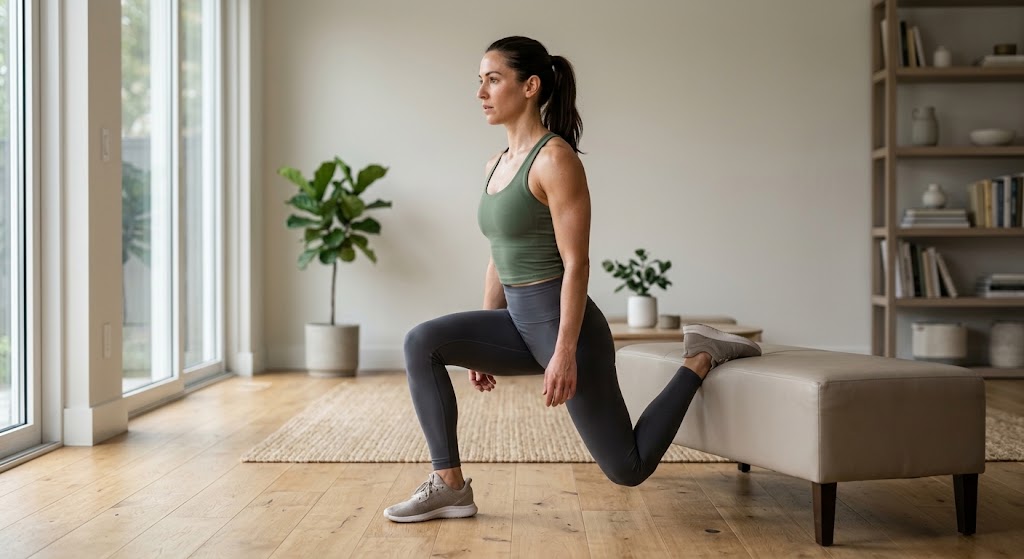
- Split Squats: Step one foot back and lower your body vertically while keeping your chest upright.
- Glute Bridges: Lie flat on your back with knees bent, pressing through your heels to lift your hips.
- Chair Dips: Place your hands on the edge of a stable chair to lower and raise your upper body.
- Wall Push-Ups: Lean against a wall at arm’s length, lowering your chest slowly before pressing back.
Official health guidelines from the NHS recommend performing muscle-strengthening activities at least twice weekly. Perform 8 to 15 controlled repetitions per exercise, allowing adequate recovery between sessions. For a complete routine, explore our guide on full body home workout routines for beginners.
Make Everyday Eating Habits More Fat-Loss Friendly
Sustainable habits support your goal to lose belly fat without going to the gym far better than temporary restrictive diets:
- Start with Water & Protein: Begin your day with a large glass of water followed by a protein-focused breakfast (such as eggs or Greek yogurt) to stabilize appetite signals.
- Practice Mindful Eating: Eliminate screen distractions during meals, chew slowly, and stop eating when reasonably satisfied.
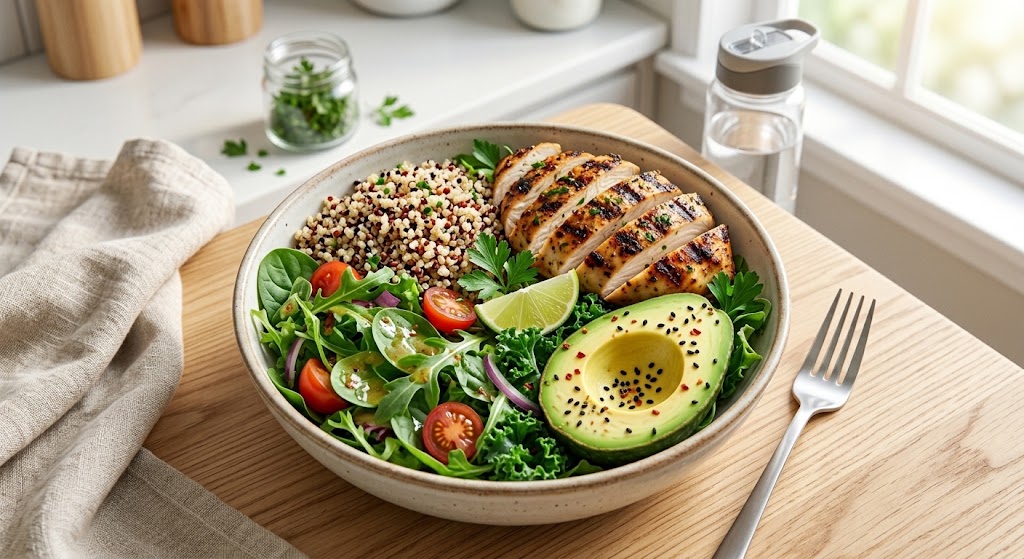
- Build Balanced Plates: Combine lean protein sources, complex carbohydrates, and wholesome fats at every major meal.
- Limit Ultra-Processed Snacks: Replace packaged chips and sugary treats with fresh fruits, raw nuts, or whole-food snacks.
Improve Sleep Quality and Manage Stress
Getting 7 to 9 hours of nightly sleep supports crucial metabolic and appetite-regulating hormones. Guidelines from Harvard Health demonstrate that inadequate rest impairs insulin sensitivity and elevates ghrelin, the hormone responsible for hunger cravings.
Elevated stress levels trigger cortisol release, which promotes abdominal fat storage and triggers emotional eating. Managing daily stress through light stretching, deep breathing exercises, or outdoor walking helps keep stress hormones balanced. Maintaining proper sleep habits is vital, as sleeping less than 6 hours a night significantly hinders fat loss efforts.
Common Mistakes to Avoid When Trying to Lose Belly Fat at Home
Steer clear of these common missteps when trying to lose belly fat without going to the gym:
- Relying Solely on Scale Weight: Scale numbers fluctuate due to fluid levels and digestion. Use a soft measuring tape and monthly progress photos to judge changes.
- Underestimating Caloric Intake: Eyeballing food portions often leads to undercounting intake. Weighing foods on a digital kitchen scale ensures accuracy.
- Skipping Resistance Training: Relying purely on dieting without muscle-building exercises can result in lean tissue loss.
- Trusting “Diet” Label Claims: Processed “low-fat” items frequently contain high amounts of added sugars.
- Neglecting Protein and Fiber: Inadequate intake of satiety-boosting nutrients increases hunger and leads to overeating.
How Long Does It Take to See Results?
Fat loss timelines vary based on starting point, dietary adherence, and baseline activity levels. Progress typically follows two distinct stages:
- Initial Stage (Weeks 1–4): Early weight loss consists primarily of fluid shifts, glycogen depletion, and initial digestive changes.
- Fat Loss Stage (Weeks 4+): True adipose tissue reduction occurs steadily at a sustainable rate of 1 to 2 pounds per week.
Visual changes generally become noticeable to you around week 4, to close friends by week 8, and broadly by week 12. Staying consistent with your daily habits is the key to lasting progress.
Frequently Asked Questions
1. Can I lose belly fat without following a strict diet?
Yes. Focusing on sustainable portion control, protein-rich whole foods, and increased daily movement creates an energy gap without requiring extreme restrictions.
2. What should I do if my body shape changes but the scale stays the same?
This indicates body recomposition—losing body fat while retaining lean muscle. Track progress using a measuring tape and progress photos rather than scale weight alone.
3. How can I tell if I am eating more calories than intended?
Track everything you consume in a digital logging app for two weeks, including cooking oils, beverages, sauces, condiments, and minor bite-sized snacks.
4. What should I do if reducing calories makes me feel hungry?
Increase your consumption of high-volume, low-calorie foods rich in dietary fiber and lean protein to promote abdominal fullness.
5. Why does weight loss slow down after the first month?
Initial rapid drops often represent water weight. True fat reduction occurs at a steady rate of 1 to 2 pounds per week, which requires ongoing consistency.