

Daily weight changes can make it hard to tell if you are really losing body fat. Water retention, sodium intake, and digestion can cause your scale weight to jump up or down unexpectedly. In this guide, you will learn how to calculate a weekly average weight for weight loss to smooth out these temporary changes, spot true fat loss trends, and adjust your routine with complete confidence. Read on.
Quick Answer
- The Core Formula: Add your seven daily morning weight readings together and divide the total by seven to get your accurate weekly average.
- Keep Routines Consistent: Step on the scale every morning after using the bathroom and before eating or drinking, using the same digital scale each time.
- Smooth Out Fluctuations: Using a weekly average reduces the misleading impact of fluid changes, glycogen shifts, food volume, and workout inflammation.
- Evaluate Multi-Week Trends: Track your weekly averages for at least two to three weeks before deciding if your fat loss progress has slowed.
- Adjust When Necessary: If your weekly average remains flat for three consecutive weeks, review your food logging accuracy and daily calorie deficit.
How to Calculate a Weekly Average Weight for Weight Loss
To calculate a weekly average weight for weight loss effectively, start by understanding your overall energy needs. Using an online TDEE calculator or formulas like the Harris-Benedict equation allows you to establish your daily maintenance intake.
Once you establish your maintenance baseline, you can create a daily energy gap. According to research tools from Harvard Health, creating a daily shortfall of 500 to 1,000 calories drives roughly 1 to 2 pounds of fat loss per week.
You can estimate expected weekly weight loss using this simple relationship:
Expected Weekly Loss = (Daily Calorie Deficit × 7) ÷ 3,500
Because roughly 3,500 calories equal one pound of body fat, a 500-calorie daily gap yields a total weekly deficit of 3,500 calories, resulting in approximately 1 pound of weight loss weekly.
Why Use a Weekly Average Instead of Your Daily Weight?
Daily scale weigh-ins can feel frustrating because body weight naturally shifts every day. Fluid balance, digestive contents, salt consumption, and hormonal shifts can cause the scale to rise even when you are burning fat.
When you learn to calculate a weekly average weight for weight loss, you smooth out these daily spikes and view your true direction. Instead of reacting emotionally to a single morning reading, you focus on the broader trend over several weeks.
This approach significantly lowers scale stress, prevents impulsive diet changes, and keeps your primary focus on building consistent daily habits.

What Does Your Weekly Average Weight Tell You?
Daily scale readings reflect much more than body fat. They change based on hydration levels, muscle glycogen, dietary fiber, exercise-induced inflammation, stress levels, and sleep quality.
For example, your daily weigh-ins during a single week might fluctuate between 65.5 kg and 67.1 kg due to normal water shifts. If you add all seven daily readings together and divide by seven, your true baseline average might equal 66.3 kg.
Tracking this average number week after week reveals whether your long-term fat loss plan is succeeding. For a full breakdown of setting your targets accurately, read our step-by-step guide on how to calculate calorie deficit for fat loss to support your weigh-in routine.
How to Track Your Weekly Average Weight
To ensure your weekly averages remain reliable, adopt a simple tracking system and a structured weigh-in routine.
1. Use a Simple Weight-Tracking Spreadsheet or App
Record your daily morning numbers in a simple smartphone app, a fitness tracker, or a digital spreadsheet programmed to calculate weekly averages automatically.
2. Keep Your Weigh-In Routine Consistent
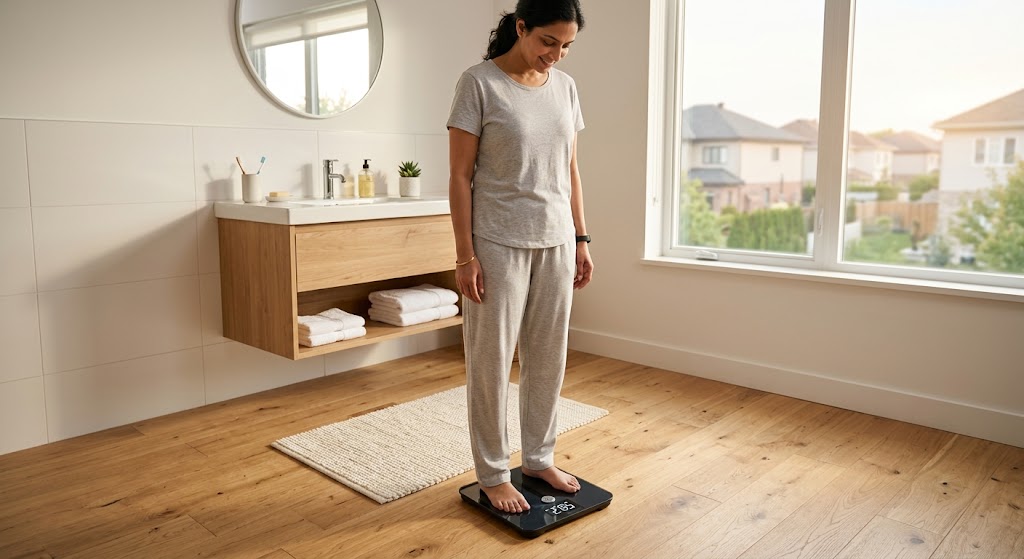
- Weigh yourself completely unclothed or in minimal lightweight garments every morning.
- Always use the bathroom before stepping onto the scale.
- Stand relaxed on the scale with your weight evenly distributed, then record the reading.
- Use a digital scale rather than an analog model, as digital scales measure precise 0.2-pound increments.
How Often Should You Calculate Your Weekly Average?
Although daily weigh-ins build habit awareness, individual daily numbers should never trigger dietary changes. Body weight can fluctuate by 1 to 3 kg in a single day simply due to water retention and food volume.
To calculate a weekly average weight for weight loss correctly, follow the exact same routine each morning, log the number without emotional reaction, and sum all seven values every Sunday morning to compute your official 7-day average.
When Should You Adjust Your Weight-Loss Approach?
Dynamic body weight charts supported by the National Institutes of Health (NIH) show that metabolic adaptation gradually alters energy expenditure over time.
Use your weekly averages to decide when it is time to refine your strategy:
1. After Two to Three Weeks of True Stalls
If your weekly average number stays completely unchanged for three consecutive weeks despite accurate meal tracking, you have reached a true progress plateau.
2. When Metabolic Adaptation Occurs
As you lose body weight, your smaller body requires fewer calories to operate. If your weekly average trend stops dropping, recalculate your maintenance baseline to match your current body weight.
3. Following Changes in Daily Activity
If your job or exercise routine shifts, your daily activity burn changes. Monitoring weekly averages helps you adjust meal portions to reflect your new daily expenditure.
4. When Fatigue or Hunger Become Severe
If your weekly average drops extremely fast while you experience chronic exhaustion, extreme hunger, or weakness, your energy gap may be too deep. Consider adding 100 to 200 calories back to your daily intake.
5. During Hormonal or Seasonal Shifts
Temporary fluid retention during hormonal cycles or seasonal diet changes can mask fat loss. Comparing weekly averages across multiple months helps you separate temporary fluid retention from true progress.
To complement your active daily routine, check out our comparison on three 10 minute walks vs one 30 minute walk to keep your daily calorie burn high.

Common Errors When Calculating Weekly Averages
- Inconsistent Weigh-In Timing: Weighing yourself in the morning one day and at night the next ruins tracking accuracy.
- Reacting to Single Daily Spikes: Cutting calories immediately after one high morning reading disrupts your long-term plan.
- Skipping Days Randomly: Missing several weigh-ins makes your weekly average mathematical calculation less accurate.
- Ignoring Unmeasured Extras: Failing to track cooking oils, drinks, and casual bites will offset your energy deficit regardless of scale accuracy.
- Ignoring Sleep Quality: Sleeping less than 6 hours a night spikes stress hormones, causing water retention that temporarily hides fat loss progress.
Frequently Asked Questions
1. What is the formula to calculate a weekly average weight for weight loss?
Add all seven daily weight readings together for the week, then divide the total sum by seven. The resulting number is your official weekly average weight.
2. Do I need to weigh myself every day to calculate a weekly average?
Yes, weighing yourself daily provides the most accurate weekly picture. However, if you miss a day, sum the available readings and divide by the number of days measured.
3. Is a weekly average weight more accurate than a single weigh-in?
Yes. A weekly average eliminates short-term shifts caused by hydration, bowel movements, sodium consumption, and glycogen storage, giving you a clear view of true fat loss.
4. What should I do if my weekly average goes up?
Avoid making immediate drastic cuts based on one higher weekly average. Compare trends across two to three weeks. If the upward trend continues, audit your calorie tracking accuracy.
5. How many weeks should I track my average weight to spot a trend?
Track your weekly averages for at least two to three consecutive weeks before deciding whether to lower your calories or increase your physical activity.