
Feeling hungry shortly after finishing your afternoon meal can make sticking to a calorie deficit frustrating and difficult. High-fiber foods delay gastric emptying, stabilize blood sugar levels, and keep appetite hormones in check. In this guide, we explore practical, delicious high-fiber lunch ideas for staying full during weight loss that seamlessly fit into your daily routine. Read on.
Quick Answer
- Embrace Fiber-Rich Whole Foods: Incorporate legumes, cruciferous vegetables, fruits, and whole grains into your midday meal to prolong satiety and control appetite.
- Target Ideal Portions: Aim for approximately 8 to 12 grams of fiber per lunch to help reach your total daily target smoothly.
- Combine Satiety Triad: Pair dietary fiber with lean protein (chicken, eggs, tofu, lentils) and healthy fats (avocado, seeds, olive oil) for maximum fullness.
- Prevent Digestive Discomfort: Increase daily fiber intake gradually, drink ample water, and distribute fiber evenly across all meals to prevent bloating.
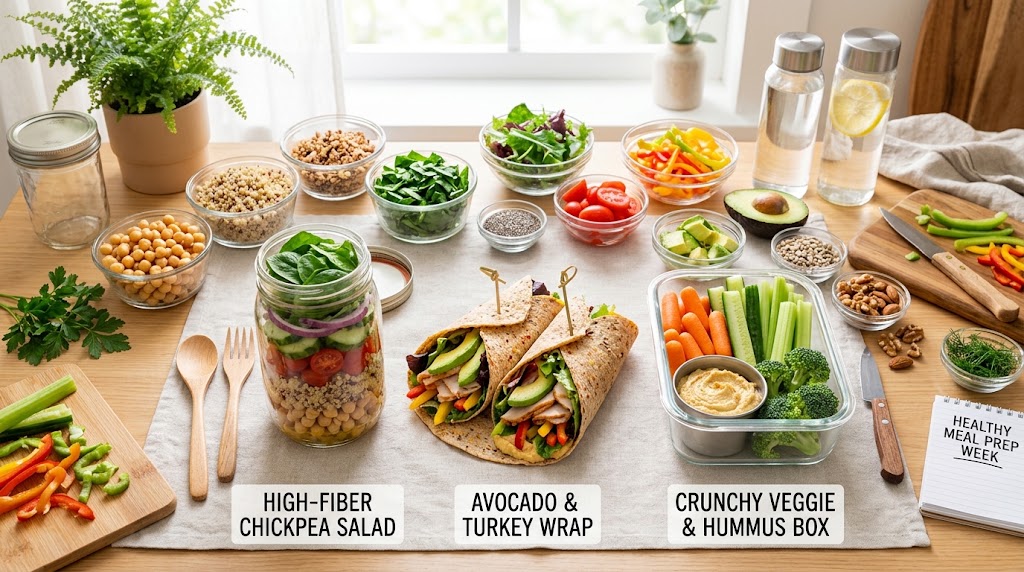
- Prep in Advance: Build easy meal-prep options like chickpea mason jar salads, hummus wraps, and black bean bowls to maintain consistency on busy workdays.
How Fiber Helps You Stay Full During Weight Loss
Dietary fiber plays an indispensable role in sustainable fat loss by enhancing satiety without adding excessive calories. Integrating fiber-dense ingredients into your lunch ensures sustained physical fullness and prevents mid-afternoon sugar cravings.
How Dietary Fiber Supports Fullness
Unlike simple carbohydrates, dietary fiber resists rapid digestion. As it moves through your gastrointestinal tract, viscous soluble fiber absorbs water to form a gel-like substance that slows nutrient absorption and gastric emptying. This mechanism sustains energy levels and prevents sharp blood sugar spikes that trigger sudden hunger.
When you remain satisfied between meals, relying strictly on willpower becomes unnecessary. Furthermore, fiber acts as a prebiotic, nourishing beneficial gut microbes that produce short-chain fatty acids (SCFAs). These fatty acids trigger satiety hormones such as GLP-1 and PYY, signaling to your brain that you are comfortably full.
8 High-Fiber Lunch Ideas for Staying Full During Weight Loss
Here are eight nutritious, high-fiber lunch options designed to maximize fullness while supporting your fat-loss goals:
- Marinated Tempeh Salad: Toss pan-seared marinated tempeh with roasted sweet potato cubes, kale, and a creamy tahini dressing for 17 grams of fiber per serving.
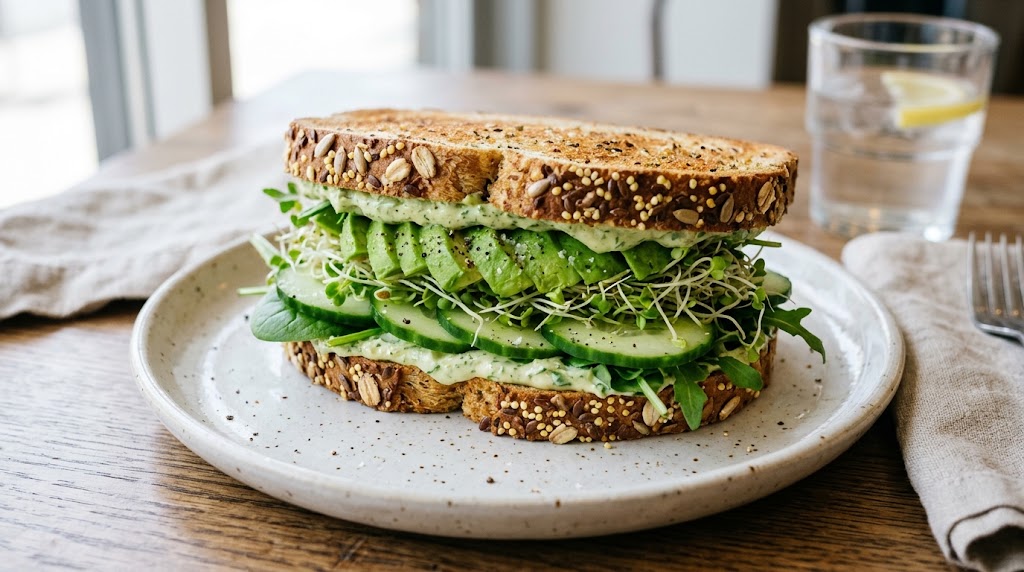
- Green Goddess Sandwich: Stack sliced avocado, crisp cucumber, sprouts, and spinach between two thick slices of sprouted whole-grain bread for 25 grams of fiber.
- Crunchy Cabbage & Black Bean Salad: Shred red and green cabbage, mix in black beans and diced avocado, and toss with a light orange-cumin vinaigrette.
- Grilled Vegetable Wrap with Hummus: Spread rich hummus over a high-fiber whole-wheat tortilla and stuff it with grilled zucchini, bell peppers, and eggplant (16 grams of fiber).
- Black Beans and Cauliflower Rice Bowl: Sauté seasoned cauliflower rice and pair it with fiber-packed black beans, diced tomatoes, and cilantro-lime dressing (15 grams of fiber).
- Roasted Red Pepper & Carrot Sandwich: Layer roasted red peppers, grated carrots, and spicy sriracha hummus on a whole-grain baguette for 8 grams of fiber.
- High-Protein Veggie Salad: Toss leafy greens, chickpeas, edamame, and diced avocado with extra virgin olive oil and fresh lemon juice.
- Chickpea-Cucumber Salad Sandwich: Mash chickpeas with Greek yogurt, diced cucumber, and herbs, then serve on toasted whole-wheat bread for a high-fiber, high-protein vegetarian meal.
The general daily recommendation is at least 25 grams of fiber for women and 38 grams for men. Including these high-fiber lunch ideas makes reaching those daily targets straightforward.
How to Build a High-Fiber Lunch That Keeps You Satisfied
Creating effective high-fiber lunch ideas for staying full during weight loss requires balancing fiber sources with essential macronutrients.
Start With a Fiber-Rich Base
Build your meal around complex carbohydrates and vegetables. Excellent options include quinoa, brown rice, wild rice, farro, lentils, chickpeas, black beans, broccoli, kale, and high-fiber sprouted whole-grain wraps.
Add Protein and Healthy Fats
Fiber works synergistically with protein and healthy fats to slow digestion even further. Pair your fiber base with lean proteins like grilled chicken breast, turkey, tuna, eggs, tofu, or tempeh. Add heart-healthy fats using avocado, extra virgin olive oil, pumpkin seeds, or almonds.
Choose Portions That Match Your Goals
Aim for 8 to 12 grams of fiber per lunch session. To ensure your overall calorie intake stays optimized for body composition changes, learn how to calculate calorie deficit for fat loss accurately.
Common Mistakes to Avoid When Eating High-Fiber Lunches
To enjoy the benefits of a high-fiber diet without experiencing digestive discomfort, avoid these common pitfalls:
- Focus on Whole Foods: Rely on natural fiber sources like legumes, vegetables, berries, and whole grains rather than synthetic fiber additives or processed bars.
- Increase Water Intake: Fiber absorbs fluids to create bulk; failing to drink sufficient water can lead to constipation and cramping.
- Distribute Fiber Evenly: Avoid consuming your entire daily fiber goal in a single sitting. Spread fiber intake across breakfast, lunch, dinner, and snacks.
- Ramp Up Intake Gradually: If your current diet is low in fiber, increase your daily intake by 3 to 5 grams per week to allow your gut microbiome time to adapt.
- Combine Soluble and Insoluble Fiber: Soluble fiber (oats, beans, apples) slows digestion, while insoluble fiber (whole wheat, leafy greens) aids regular bowel movements. Include both types daily.
For sustainable results, combine your nutrition with a structured training program like our full body home workout routine for beginners to preserve lean muscle tissue while losing fat.
Tips for Preparing High-Fiber Lunches Ahead of Time
Advance meal preparation prevents poor impulse choices on busy workdays. Use these time-saving strategies:
- Separate Wet and Dry Ingredients: Pack crispy items like whole-grain crackers, seeds, or nuts separately and combine them right before eating.
- Utilize Mason Jar Layering: Place salad dressings at the bottom of a mason jar, followed by sturdy legumes (chickpeas, beans), complex grains, and delicate greens on top.
- Leverage Convenient Whole Foods: Save time using pre-cooked microwaveable quinoa pouches, canned low-sodium beans, or pre-washed baby spinach.
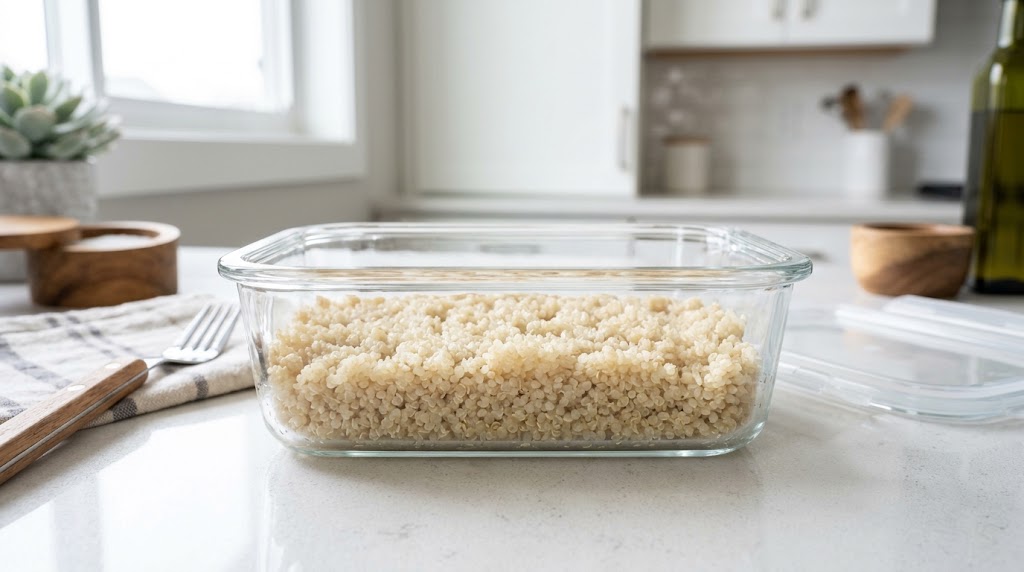
- Batch Cook Grains and Proteins: Cook large batches of quinoa, brown rice, and chicken breast on weekends to quickly assemble lunches throughout the week.
Pairing these meal-prep strategies with high-quality nutrition helps prevent night-time cravings. If you struggle with late-night eating, check our guide on why you feel hungry soon after eating for more insights.

Frequently Asked Questions
1. What is the best high-fiber lunch for weight loss?
A balanced meal combining legumes, leafy greens, lean protein, and healthy fats—such as a black bean and quinoa bowl with avocado and grilled chicken—is ideal for sustained fullness and weight loss.
2. How much fiber should I aim for at lunch?
Aim for approximately 8 to 12 grams of fiber at lunch. This helps you reach daily targets of 25 grams for women and 38 grams for men without overwhelming your digestive system.
3. Can high-fiber lunches reduce afternoon snack cravings?
Yes. Fiber slows down digestion and stabilizes blood sugar levels, preventing the energy dips and sharp hunger spikes that usually cause afternoon snacking.
4. Are beans and lentils good for weight loss?
Excellently so. Beans and lentils are packed with plant-based protein, complex carbohydrates, and soluble fiber, making them highly filling yet low in calorie density.
5. How can I increase my fiber intake without getting bloated?
Increase your fiber intake slowly over 2 to 3 weeks, drink plenty of water throughout the day, and chew your food thoroughly to give your digestive system time to adjust.