
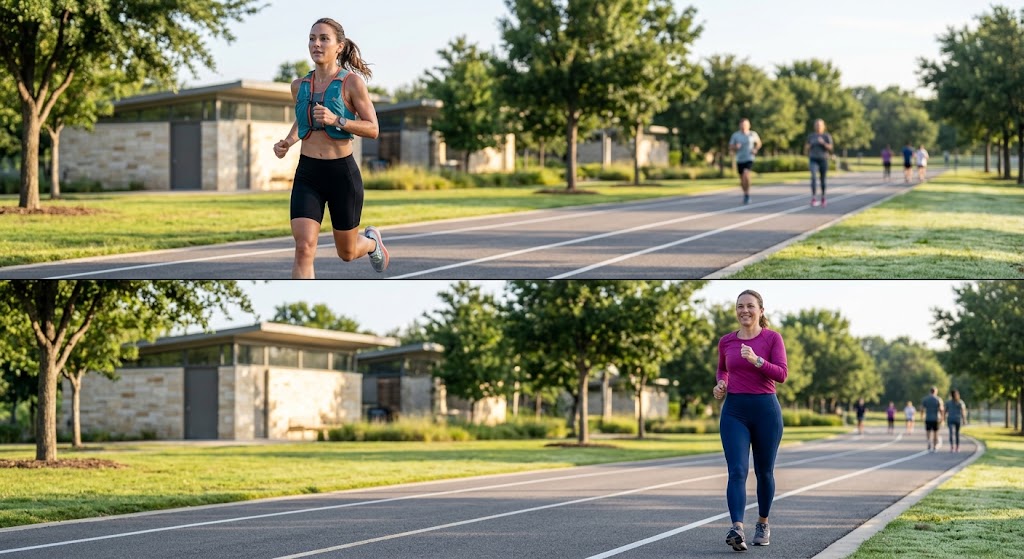
If you are trying to decide whether walking vs running for weight loss is the superior choice, selecting the right workout routine can feel overwhelming. Evaluating calorie expenditure, joint strain, and long-term adherence helps you design a program that fits your personal lifestyle. In this ultimate breakdown of walking vs running for weight loss, you will explore how both movement styles impact fat loss, metabolic afterburn, and recovery. Read on.
Quick Answer
- Calorie Efficiency: Running burns more calories per minute than walking, but walking is far easier to maintain consistently over longer periods.
- Joint Impact: Walking is a low-impact activity that minimizes joint stress, making it optimal for beginners or those recovering from injuries.
- Endurance and EPOC: Running accelerates calorie burning and builds cardiovascular endurance, though it demands greater recovery time.
- Hybrid Approach: Combining walking and running optimizes calorie burn, consistency, and physical recovery.
- Habit Retention: Maintain momentum by exploring new routes, working out with partners, setting realistic benchmarks, or tracking personal mile times.
Walking vs Running for Weight Loss: What’s the Difference?
When comparing walking vs running for weight loss, total energy burn is only one piece of the equation. While running consumes more energy per minute, the most effective workout routine is always the one you can stick to consistently over time.
According to exercise data published by Harvard Health, jogging at 6 mph burns roughly double the energy per hour compared to walking at 3.5 mph. However, when comparing equal distances, the difference narrows to about 15% to 25% total energy variance.
Additionally, high-intensity running generates Excess Post-Exercise Oxygen Consumption (EPOC), often called the “afterburn effect”. Research indexed by the National Institutes of Health (NIH) shows EPOC can boost total workout energy expenditure by 6% to 15% for 24 to 48 hours. Walking produces minimal afterburn, yet your overall weekly caloric shortfall remains the primary driver of total body fat reduction.
Which Burns More Calories? Walking or Running?
Both activities enhance cardiovascular health, but they differ significantly in intensity, joint stress, and long-term sustainability.
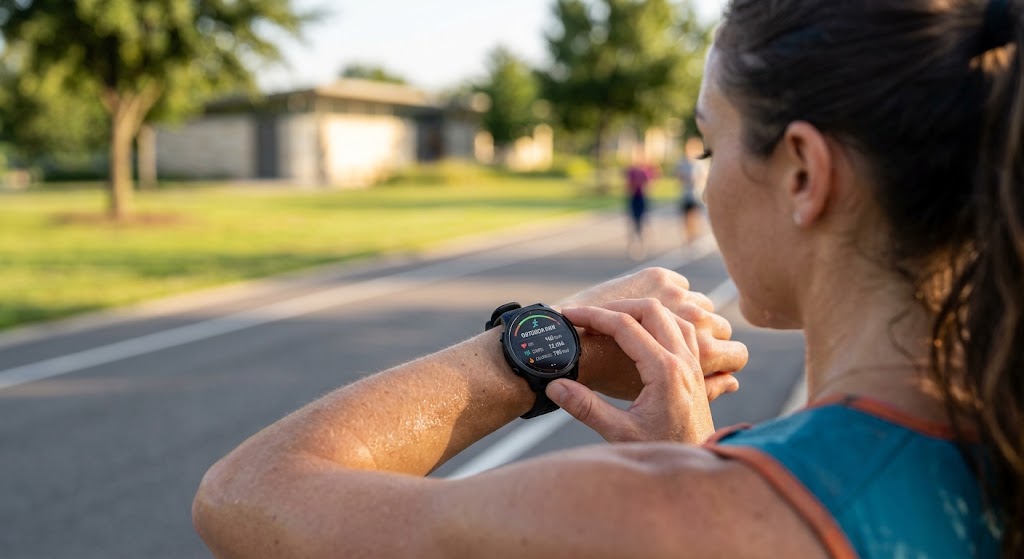
Running uses substantially more energy per minute than walking. For instance, a 150-pound individual burns approximately 600 calories per hour jogging at 6 mph, compared to roughly 300 calories per hour walking at 3.5 mph. Incorporating interval training or sprinting further elevates metabolic output and maximizes EPOC afterburn.
Conversely, brisk walking is a gentle, low-impact exercise that protects the hips, knees, and ankles. This makes walking an ideal entry point for beginners, individuals managing joint pain, or those adhering to a calorie deficit diet plan where recovery capacity is limited.
Choose running if quick calorie expenditure and fast cardiovascular adaptations are your main priorities. Choose walking if you want a low-stress daily habit that minimizes appetite spikes and joint strain. Combining both movement styles offers a balanced approach to fat loss.
Which Is More Effective for Long-Term Health?
Both disciplines yield profound health benefits, yet cater to distinct athletic needs:
- Running: Clinical reviews from the American Heart Association indicate that regular running can significantly lower the risk of stroke, type 2 diabetes, and cardiovascular disease. It is ideal for those training for endurance events or seeking high-intensity workouts.
- Walking: Offers low-intensity cardiovascular conditioning, improves metabolic markers, and enhances parasympathetic recovery without subjecting joints to high impact.
Prioritizing safety is crucial when increasing running volume. Escalating mileage too quickly can lead to stress fractures or ligament injuries. Beginners should implement structured walk-run intervals, take periodic rest breaks during longer efforts, and stop immediately if sharp pain, dizziness, or chest discomfort occurs.
Walking vs Running for Weight Loss: Pros and Cons

| Factor | Walking | Running |
|---|---|---|
| Pros | Highly sustainable and easy to maintain as a daily long-term habit. Easily integrated into daily life via step counting, active meetings, or parking farther away. Loads joints lightly at roughly 1 to 1.5 times body weight, lowering injury risk. Supports parasympathetic balance and keeps appetite hormones steady. Improves muscle mitochondrial density and slow-twitch fiber efficiency. | Higher energy burn rate per minute when workout time is restricted. A 150-pound person burns roughly 600–1,000 calories per hour at moderate to fast paces. Allows you to reach your target weekly caloric deficit much faster. Triggers EPOC afterburn for up to 48 hours post-workout. Stimulates greater AMPK metabolic activation and cardiac output. |
| Cons | Lower total energy expenditure per hour (approx. 240–400 kcal/hr for a 150-lb individual). Requires significantly longer workout durations to match the caloric expenditure of running. | Subjects joints to heavy impact forces equal to 2 to 4 times body weight. Can elevate systemic stress and cortisol levels if recovery or sleep is inadequate. |
How to Make Your Walking or Running Routine Work
Preventing boredom and maintaining consistency are essential when evaluating walking vs running for weight loss. Implementing practical advice from sports cardiologists like Dr. Aaron Baggish can keep your routine fresh and engaging:
- Explore New Routes: Vary your scenery, incline, and terrain weekly to keep workouts mentally stimulating. Use fitness apps to discover popular community trails.
- Reverse Your Path: Alternate workout times or complete your standard neighborhood route in reverse to change your perspective.
- Partner Up: Exercise with a training partner to establish mutual accountability and reduce missed sessions.
- Join Local Fitness Clubs: Connect with community walking or running groups to stay motivated alongside peers of similar fitness levels.
- Establish Progressive Targets: Set clear weekly mileage goals or sign up for local 5K events to stay focused.
- Track Time Benchmarks: Measure your pace over a fixed distance (e.g., 1 mile) and track your gradual improvements over time.
Frequently Asked Questions
1. Can I change my walking or running routine without changing the activity?
Yes. You can refresh your routine by choosing different routes, training at different times of day, exploring varied terrain, or pairing your movement with beginner weight training routines for better body composition.
2. How can I stay accountable to my exercise routine?
Scheduling sessions with a friend, joining a local walking or running group, or logging your daily steps in a fitness tracker greatly improves consistency.
3. How can I tell if my running or walking performance is improving?
Track your completion time over a fixed distance, such as one mile. As your cardiovascular fitness improves, your completion time will decrease at the same rate of effort.
4. What can I do if I lose interest in my usual workout route?
Introduce new outdoor scenery, add incline intervals, or set fresh weekly distance benchmarks to spark motivation.
5. Can signing up for a specific event help keep me focused on fat loss?
Yes. Registering for a structured event, such as a community 5K walk/run, provides a tangible objective and keeps your daily training structured.