
Trying to lose belly fat at home can be challenging when you are unsure which movements deliver the best results. A combination of cardio, resistance training, and smart diet management is key. In this guide, we explain which exercises burn the most belly fat without going to the gym and how to structure your routine effectively. Read on.
Quick Answer
- Full-Body Movements: Dynamic exercises like mountain climbers, squat jumps, and burpees engage large muscle groups and boost calorie burn.
- Overall Fat Loss Required: Spot reduction is a myth. A consistent calorie deficit reduces total body fat, while core exercises strengthen the underlying abdominal muscles.
- Balanced Weekly Schedule: Combine 2 to 3 days of cardio with 2 to 3 days of bodyweight strength training, leaving 2 dedicated rest days.
- Avoid Over-Training: Choose manageable 30 to 60-minute workouts rather than grueling 90-minute-plus sessions.
- Lifestyle Support: Prioritize adequate protein, stay hydrated, and get 7 to 8 hours of sleep per night to maximize your progress.
What Are the Best Home Exercises for Losing Belly Fat?
The most effective home workouts engage your entire body, burn significant calories, and preserve muscle mass. Performing these exercises sequentially as a circuit keeps your heart rate elevated:
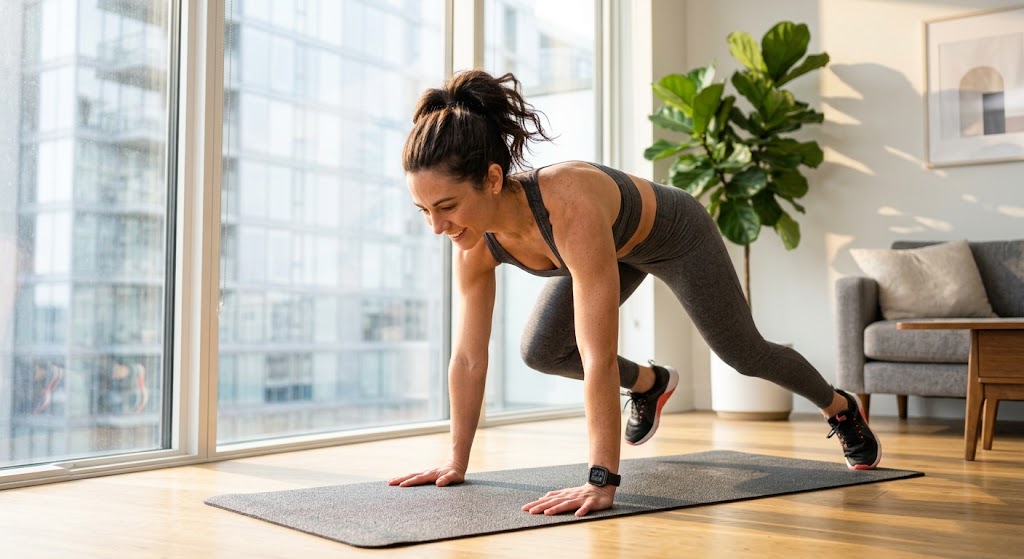
- Mountain Climbers: Start in a solid high plank. Rapidly alternate pulling your knees toward your chest for 30 to 45 seconds while maintaining core stability.
- Squat Jumps: Lower into a standard squat, explosively jump upward, land softly on bent knees, and immediately reset for 15 to 30 seconds.
- Burpees: Drop from a standing position into a plank, perform a push-up, jump your feet back under your hips, and leap upward with arms extended. Repeat for 30 to 60 seconds.
- Jumping Lunges: Begin in a standard lunge and jump upward to switch leg positions in mid-air. Continue for 30 seconds.
- High Knees: Run in place while aggressively lifting your knees toward your chest for 30 to 60 seconds.
(Note: Always warm up before beginning intense exercise and consult a healthcare professional if you have preexisting joint or heart conditions.)
Can You Lose Belly Fat With Home Workouts?
It is common to want a slimmer waistline, but your body decides where it burns fat based on genetics and overall metabolic demand. Traditional core exercises like crunches strengthen your abdominal muscles, but they do not specifically target the fat sitting on top of those muscles.
How Fat Loss Actually Works
To reduce abdominal fat, you must reduce overall body fat. A calorie deficit occurs when you consume fewer calories than your body uses for daily metabolic functions and activity. During exercise, your body mobilizes stored fat cells from all over the body, rather than from just one target zone.
Which Home Exercises Help Most?
Aerobic and systemic bodyweight training are ideal for burning energy at home without specialized equipment:
- Moderate-Intensity Activity: Aim for at least 150 minutes per week. Activities like active house cleaning, gardening, and steady home workouts count toward this goal according to physical activity guidelines by the World Health Organization (WHO).
- Vigorous-Intensity Activity: Aim for at least 75 minutes per week using high-intensity home circuits, brisk walking, or running outdoors. You can also explore a full-body home workout routine for beginners.
How Often Should You Exercise at Home to Lose Belly Fat?
Finding a sustainable schedule is critical for consistency. Daily intense training can lead to fatigue or injury, whereas training only once a week is usually insufficient for noticeable changes.
A balanced structure includes 2 to 3 days of cardio and 2 to 3 days of bodyweight resistance, alongside 2 complete rest days each week. Keep these core guidelines in mind:
- Avoid Extremes: Do not jump from complete inactivity to demanding daily workouts.
- Focus on Consistency: Select a schedule that fits your daily life long-term.
- Prioritize Quality: Shorter 30 to 45-minute sessions done with good form yield better long-term results than grueling 90-minute workouts.
- Adjust for Plateaus: If progress stalls, review your workout intensity, nutrition accuracy, and recovery habits.
What Other Habits Support Belly Fat Loss?
Understanding belly fat requires knowing the two primary types: subcutaneous fat (located directly under the skin) and visceral fat (stored deeper around abdominal organs). Research from Harvard Health indicates that visceral fat is particularly responsive to a combination of exercise and targeted lifestyle changes.
Prioritize Strength Training
Bodyweight resistance exercises like push-ups, squats, and lunges build lean muscle mass. Growing muscle fibers increases your resting metabolic rate, helping your body burn more energy even when you are resting.
Add Aerobic Activity
Pairing regular resistance training with 30 to 60 minutes of moderate aerobic movement like brisk walking for weight loss is significantly more effective for targeting deep visceral fat than relying on diet alone.
Adjust Protein Intake
Sufficient protein intake preserves lean muscle while in a calorie deficit. Aim for roughly 30 grams of protein per primary meal. Excellent options include chicken, fish, eggs, Greek yogurt, legumes, and budget-friendly high-protein meal preps.

Manage Calories Mindfully
Consuming excess calories contributes directly to fat storage. However, severe starvation diets cause muscle loss and metabolic slowdown. Maintain a modest calorie deficit paired with adequate nutrition.
Common Mistakes To Avoid
Avoid these common pitfalls when attempting to lose abdominal fat at home:
- Drinking Liquid Calories: Fruit juices and sweetened beverages add hidden sugars without making you feel full. Drink plain water, herbal tea, or black coffee instead.
- Extreme Calorie Restriction: Skipping meals can trigger intense hunger pangs later in the day, leading to overeating. Focus on nutrient-dense whole foods instead.
- Neglecting Protein: Inadequate protein makes recovery slower and appetite management harder.
- Ignoring Sleep Quality: Chronic sleep restriction elevates stress hormones like cortisol, which encourages abdominal fat retention. As highlighted by the National Institutes of Health (NIH), getting 7 to 8 hours of sleep is vital for metabolic regulation. Consider adopting bedtime habits to support your metabolism.
- Overtraining: Doing too much too fast leads to joint pain and exhaustion. Focus on gradual progress.
Frequently Asked Questions
Can home workouts be enough if you do not have gym equipment?
Yes. Bodyweight movements like push-ups, squats, lunges, and high-intensity cardio circuits provide more than enough stimulus for effective fat loss when paired with proper nutrition.
What should you do if your progress slows down or stops?
Review your calorie tracking accuracy, adjust your workout intensity, and evaluate sleep quality. Minor adjustments to dietary compliance or step counts often restart progress.
Is it better to exercise for longer or more often?
Frequency and consistency are generally superior to long, exhausting sessions. 30 to 45 minutes of focused effort 4 to 5 days a week is far more sustainable than rare 90-minute workouts.
How can you make a home workout easier to follow long-term?
Schedule your workout times like non-negotiable appointments, choose exercises you genuinely enjoy, and focus on gradual weekly progression rather than immediate results.
What should you do if a workout makes you too out of breath?
Pause, take a brief recovery break, and drink water. Always incorporate a 5-minute warm-up and cool-down to keep your heart rate transitions safe and smooth.