

Quick Answer
• Your body burns calories even when you are sleeping. It keeps performing basic functions like breathing, circulation, and digestion.
• The number of calories you burn depends on your body weight and muscle mass.
• Getting 7 to 8 hours of sleep regulates hunger hormones, which enable better weight management.
National Sleep Foundation
• Avoiding late-night snacks helps with weight loss.
• Habits like limiting screen time before bed lead to better sleep, which indirectly supports fat loss by improving appetite control.
Does Your Body Burn Fat While You Sleep?
Although many people believe their bodies shut down when they fall asleep, the truth is that they don’t. Your body still keeps running basic functions like breathing, blood circulation, and digestion. The energy burnt for these basic functions is called Basal Metabolic Rate (BMR). Which means your body keeps burning calories even when you are sleeping.
The amount of energy you burn depends on several personal factors:
• Body weight:
The heavier the body is, the more energy it burns. For example, if you are 56 kg, you might only burn 38 calories per hour, but if you weigh 83 kg, you might burn 56 calories per hour.
• Muscle Mass:
Your muscle tissues burn more calories than fat, so if you have more muscles than fat, then you will burn more calories.
How Sleep Schedule Affects Weight Loss
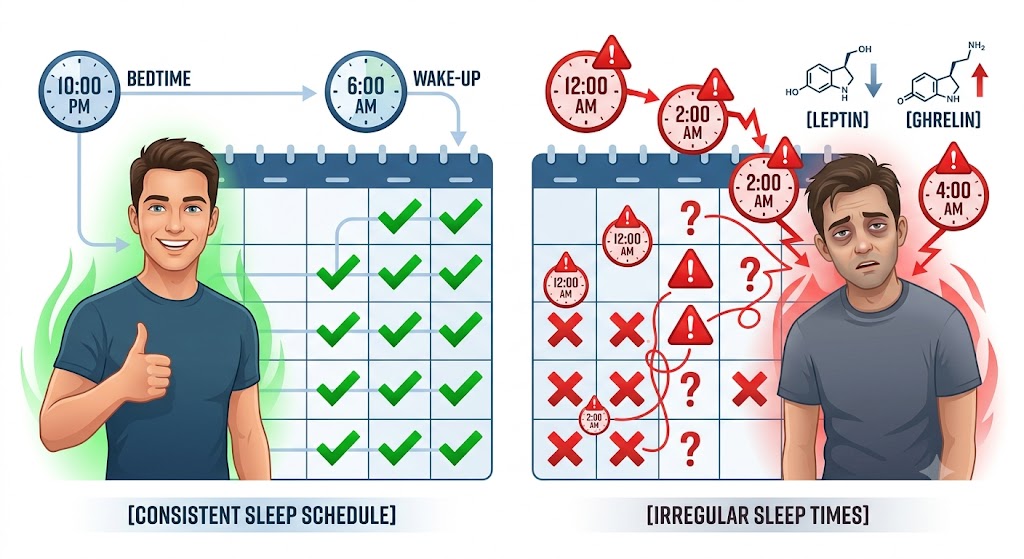
One of the best habits you can have is sleeping and waking up at the same time every day. All the functions of your body improve when you have a consistent sleeping schedule. It improves your blood sugar levels, your energy & even your food choices.
An inconsistent sleeping schedule negatively impacts your body mass index. Even missing only a few hours of sleep for a few days can cause weight fluctuations. Besides that, missing sleep drains you of energy, and it becomes harder to hit the gym the next day.
Inconsistent sleep messes up the balance of hunger hormones like leptin and ghrelin. When you don’t get enough sleep, leptin levels drop, and ghrelin levels spike. This makes you hungrier, which leads to overeating.
Consistent sleep keeps your appetite balanced & your energy levels steady, which helps you maintain a healthy body weight.
Recommended Sleep Duration for Adults:
Experts have different opinions on how much you should sleep based on your age.
Adults Adolescents (Teenagers) Children
7 to 8 hours per night 8 to 10 hours per night 10 to 16 hours per day (depending on age and activity level)
Data indicates that adults who sleep less than 6 hours per night are more prone to being overweight compared to those who regularly hit 7 hours.
Avoid Heavy Meals Right Before Bed
How Late-Night Eating Can Affect Weight Management
When you eat matters as much as what you eat. Our body has built-in clocks, which are known as circadian rhythms. These circadian rhythms are like our biological clocks that align our activities with day and night.
Here is how late-night eating impacts your body:
• Your metabolism and ability to digest food are not as effective at night as much as it is during the day. Your body doesn’t burn calories as effectively after a late-night snack.
• Eating late disrupts the hunger and satiety hormones.
• Frequent night-time eating disrupts the rhythms of your gut bacteria. It changes how your body harvests energy from the food you eat, leading to increased fat storage.
• Your glucose and lipid processing are optimized for daytime; eating at night causes “circadian disruption.” This leads to a higher risk of weight gain over time.
Best Timing for Your Last Meal
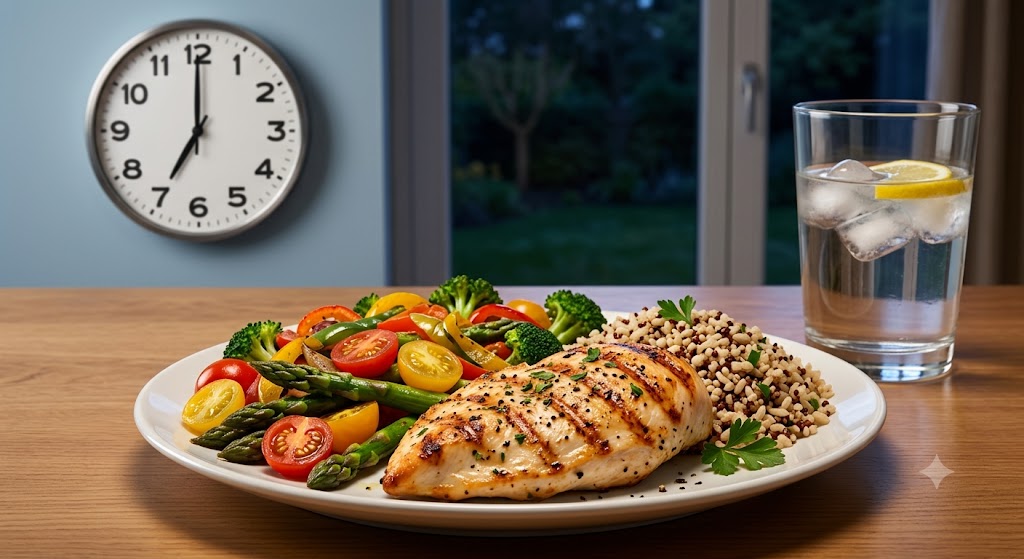
According to the research, people who finished their dinner between 7:00 PM and 7:30 PM experienced more weight loss. While those who ate their last meal between 10:30 PM and 11:00 PM experienced less weight loss compared to the first group. Both groups followed the same calorie-restricted diet.
Best Tips For Quality Sleep
Here are some tips to help you get better sleep and wake up feeling refreshed:
• Go to bed and wake up at the same time every day. Get solid 7 to 8 hours of sleep each night to maintain your weight and reduce late-night cravings.
• Dedicate at least 30 minutes before bed to unwinding. Listen to calming music or read a book. These activities signal to your body that it is time to slow down.
• Use blackout curtains or an eye mask to block out light. Reducing light helps you drift off more quickly.
• Put away your phone, laptop, and television at least 30 to 60 minutes before you intend to sleep. The light from these devices can interfere with your ability to fall asleep.
• Avoid caffeine and alcohol, as these can disrupt your sleep. Avoid eating large or high-calorie meals right before bed. Finish your last meal at least two hours before hitting the pillow to ensure your body can focus on rest rather than digestion.
• Practice meditation or deep breathing before bed. This helps lower stress hormones like cortisol, making it easier to fall asleep.
• Avoid Late-Night Snacking.
Common Myths About Burning Fat Overnight
There is a lot of popular advice that is doing more harm than good. Let’s clear up the misconceptions.
Myth 1: Starving Yourself Is the Fastest Way to Drop Pounds
You might see some weight loss at the start if you stop eating altogether, but it usually backfires. Starvation slows down your metabolism, which leads to gaining weight, not losing it.
Myth 2: Getting Plenty of Sleep Leads to Weight Gain
You might have heard that you gain weight if you sleep too much. In fact, the opposite is correct: depriving yourself of sleep makes you gain weight.
Myth 3: Stress and Sleep Are Unrelated
Cortisol, the stress hormone, plays a significant role in your sleep quality. Cortisol levels drop as the day ends; however, if you are stressed, your cortisol remains high. This keeps you alert at night and leads to habits like late-night snacking.
FAQs
Can drinking water before bed help with weight loss?
Drinking water before bed might help you avoid late-night snacking; however, it might lead to frequent bathroom trips that might disturb your sleep.
Can certain foods boost metabolism while you sleep?
No specific foods boost metabolism while you sleep; however, balanced meals containing protein, fiber, and healthy fats can promote satiety, which might indirectly support a healthy metabolism over time.
How long does it take to notice weight-loss benefits from improved sleep habits?
The timeline varies from person to person. Some individuals notice changes within a few days, while measurable changes require several weeks of consistent healthy habits.
Can napping during the day make up for lost sleep at night?
Short day naps may improve alertness and reduce fatigue, but they cannot fully replace the benefits of consistent nighttime sleep. Maintaining a regular sleep schedule remains the most effective approach for overall health and weight management.
Does age affect how many calories you burn during sleep?
Yes. Metabolism naturally changes with age, often due to reductions in muscle mass and activity levels. As a result, older adults generally burn fewer calories at rest than younger individuals of similar body size.