
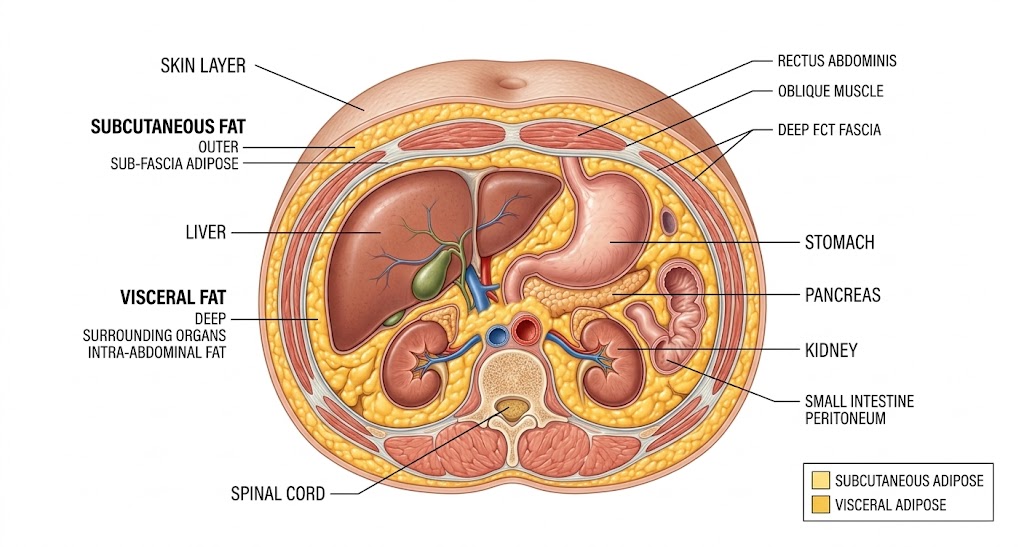
Understanding the Visceral Fat vs Belly Fat Difference is essential if you want to optimize your health and track abdominal progress effectively. Belly fat contains two distinct types of fat storage: subcutaneous tissue directly under the skin and deep visceral fat surrounding key internal organs. In this detailed guide, you will learn how to identify each fat type, assess health risks, and use targeted habits to lose fat safely. Read on.
Quick Answer
- Two Fat Types Exist: Subcutaneous fat sits directly beneath the skin, while visceral fat resides deep within the abdominal cavity around organs.
- Physical Appearance Varies: Subcutaneous tissue feels soft and pinchable, whereas deep visceral fat often creates a firm, protruding midsection.
- Hidden Health Hazards: Scale weight does not show the whole picture; an individual can maintain a normal body weight while carrying high amounts of visceral fat.
- Lifestyle Adjustments Work: Combining a balanced calorie deficit, high-protein intake, daily movement, and quality rest efficiently targets deep fat stores.
- Track Beyond Scale Weight: Monitor waist measurements alongside body weight to track true body composition changes accurately.
Subcutaneous Fat Around the Abdomen
Subcutaneous fat lies just under the skin surface. It functions as a protective cushion for internal structures and serves as an energy storage depot. Compared to deeper fat deposits, subcutaneous cells exhibit lower metabolic activity.
Why the Term “Belly Fat” Can Be Confusing
The general term “belly fat” blends different types of abdominal fat together, obscuring the core Visceral Fat vs Belly Fat Difference.
Subcutaneous fat sits superficially beneath the skin, whereas visceral fat resides deeper in the abdominal cavity. Visceral fat possesses a denser cellular architecture and displays significantly higher metabolic activity than surface tissue.
What Is Visceral Fat?
To grasp the true Visceral Fat vs Belly Fat Difference, it helps to identify where deep fat resides. Derived from the word “viscera” (referring to internal organs), visceral fat settles inside the chest and abdominal cavities.
Where Visceral Fat Is Stored
Visceral tissue lines the abdominal walls and wraps around major internal organs, including:
- Heart and pericardial cavity
- Stomach and intestines
- Liver and gallbladder
- Pancreas and kidneys
- Mesentery tissues
Visceral Fat vs Belly Fat Difference: Key Differences
The primary distinction comes down to anatomical depth and metabolic behavior. The table below outlines the major differences:
| Feature | Subcutaneous Fat | Visceral Fat |
|---|---|---|
| Location | Directly beneath the skin surface | Deep within the abdominal cavity |
| Distribution | Abdomen, hips, thighs, and arms | Encasing core internal organs |
| Tactile Feel | Soft, pliable, and easily pinchable | Firm, rigid behind the abdominal wall |
| Visual Impact | Creates soft folds or love handles | Causes a firm, round, protruding belly |
| Health Implication | Lower metabolic risk profile | Strongly tied to cardiometabolic risks |

Can You Have Belly Fat Without Having a Lot of Visceral Fat?
Yes. Your midsection stores both superficial and deep fat deposits. You can easily see and pinch subcutaneous fat, whereas visceral fat stays hidden behind the abdominal muscle wall.
Research published by the National Institutes of Health (NIH) highlights that while higher amounts of subcutaneous fat often correlate with increased visceral fat, individual balances vary based on genetics, age, and hormone levels. As total body fat decreases through a balanced calorie deficit strategy, visceral fat stores shrink alongside subcutaneous layers.
How to Tell If Abdominal Fat May Be Visceral Fat
Because deep visceral tissue cannot be touched directly, use these physical markers to evaluate your midsection:
- Pinch Test: If you can easily grasp a soft fold of fat between your fingers, it is subcutaneous tissue. A tight, firm, protruding belly with minimal pinchable skin points toward deeper visceral fat.
- Body Shape: High visceral accumulation creates a round, apple-shaped midsection. Subcutaneous fat tends to collect around the lower hips, thighs, and waistline.
- Waist Line Measurement: High-risk waist circumference thresholds sit above 88 cm (34.5 inches) for women and 102 cm (40 inches) for men. Maintaining a healthy waist-to-hip ratio (below 0.85 for women and 0.95 for men) helps lower metabolic risks.
Does Losing Belly Fat Also Reduce Visceral Fat?
Yes. When you implement daily healthy habits, visceral fat is actually metabolized faster than subcutaneous fat because of its high blood supply and metabolic responsiveness.
To reduce deep abdominal fat effectively, focus on these lifestyle shifts:
- Prioritize Whole Foods: Consume anti-inflammatory whole grains, lean proteins, vegetables, and healthy fats while limiting refined sugars and processed meats.
- Increase Protein & Fiber: Eating adequate protein preserves lean muscle while high-fiber foods support satiety and digestive health. Explore cheap high-protein meal prep ideas to stay consistent on a budget.
- Combine Exercise Modalities: Pair regular resistance training with aerobic cardio like brisk walking or incline training rather than relying solely on sit-ups.
- Optimize Sleep & Stress: Chronic stress elevates cortisol levels, which encourages deep abdominal fat storage. Prioritize rest, as sleeping less than 6 hours a night negatively impacts metabolic regulation.

How to Reduce Excess Abdominal Fat
While you cannot spot-reduce fat from a single area, reducing overall body fat shrinks your waistline and burns off visceral fat over time.
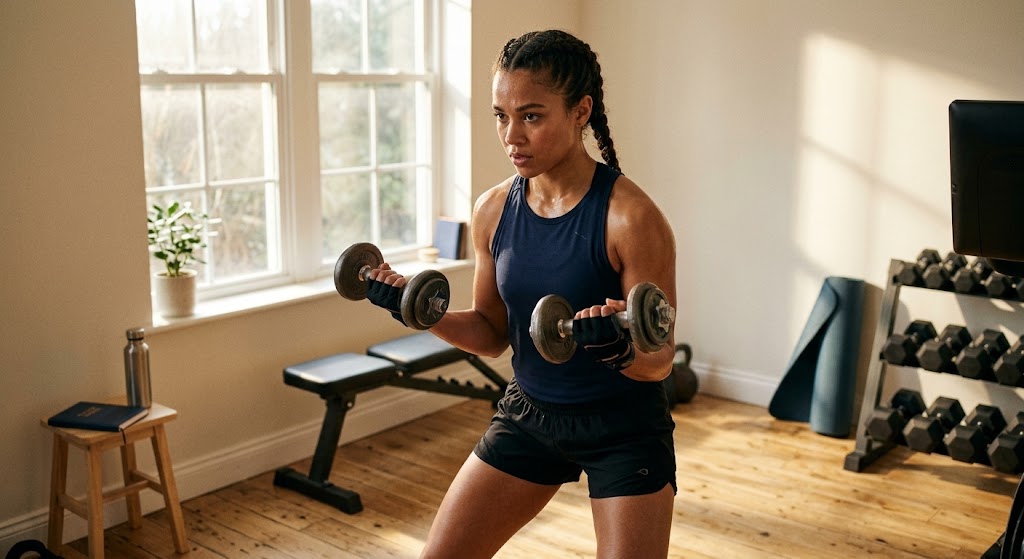
Adopt a sustainable meal plan rich in nutrient-dense foods and check nutrition labels for hidden sugars in sauces and dressings. Combine nutrition with 30 to 60 minutes of moderate activity daily. Adding a full body home workout routine builds lean muscle mass, boosting your metabolic rate at rest.
Always evaluate your progress by tracking waist measurements alongside scale weight. Building muscle while burning fat may keep scale numbers stable even as your waistline grows noticeably smaller.
Frequently Asked Questions
1. Can waist size change even if body weight does not change much?
Yes. Building lean muscle tissue while losing fat alters body composition. Your scale weight may stay flat, but your waist circumference shrinks and clothes fit more comfortably.
2. Why can two people with similar body shapes have different types of abdominal fat?
The balance between subcutaneous and visceral fat varies per individual based on biological sex, age, hormonal health, genetics, and baseline activity levels.
3. Can abdominal fat be present in areas other than the front of the stomach?
Yes. Subcutaneous fat frequently accumulates around the hips, lower back, and love handles rather than remaining solely on the front of the abdomen.
4. Why does visible belly fat not show exactly how much visceral fat someone has?
Visceral fat sits deep behind the abdominal muscles surrounding internal organs. A person can have a relatively thin outer appearance while still carrying hidden visceral fat.
5. What should you track besides your body weight?
Measure your waist circumference and waist-to-hip ratio regularly. These measurements provide clearer insights into abdominal fat reduction than scale weight alone.