
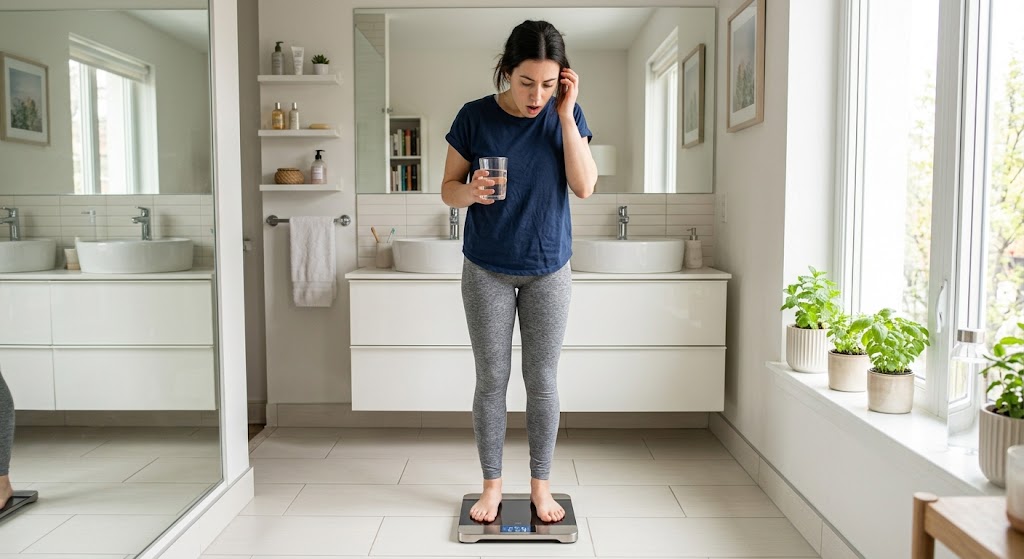
Does the scale keep going up even though you are strictly eating less food? Tracking slip-ups, stress, or temporary water retention might be disguising your true body transformation. Learning why you are gaining weight while in a calorie deficit can help you troubleshoot the issue and keep your progress moving forward. Read on.

Quick Answer
- Tracking Errors: Misjudging food portion sizes, forgetting cooking oils, and overestimating workout calorie burn can easily erase your intended calorie deficit.
- Metabolic Adaptations: Drastic calorie drops trigger adaptive thermogenesis, slowing down your resting metabolic rate and stalling progress.
- Natural Scale Fluctuations: Daily shifts in fluid balance, hormonal cycles, digestion, and glycogen storage can cause body weight to swing by 1 to 3 kg daily.
- Muscle Gain & Inflammation: Starting a new exercise program triggers temporary muscle swelling and localized fluid retention, which can raise scale weight even as fat drops.
- Medical Considerations: Underlying health conditions like hypothyroidism, PCOS, or specific prescription medications can influence fluid retention and metabolism.
What Does It Mean to Be in a Calorie Deficit?
A calorie deficit occurs when your total daily energy expenditure exceeds the energy you consume through food and drinks. Because of this energy shortfall, your body must draw upon stored energy reserves—primarily body fat—to function. Creating an energy deficit is the foundational requirement for body fat loss across all dietary approaches.
Your body expends energy through three primary mechanisms:
- Resting Metabolic Rate (60% to 70%): The baseline energy required to maintain essential life functions like breathing, blood circulation, cellular repair, and body temperature.
- Physical Activity: Includes structured workouts as well as daily spontaneous movement like walking, standing, and fidgeting—collectively known as Non-Exercise Activity Thermogenesis (NEAT).
- Thermic Effect of Food (about 10%): The energy expended by your body to digest, absorb, and process nutrients from consumed meals.
Combining these three components yields your Total Daily Energy Expenditure (TDEE). Eating consistently below your TDEE creates a sustained calorie deficit.
Why Am I Gaining Weight While in a Calorie Deficit?
Experiencing weight gain while sticking to a diet can be highly frustrating. Scientifically, a true energy deficit makes long-term fat gain impossible. When scale weight increases unexpectedly, shifts in fluid balance, measurement inaccuracies, or elevated glycogen stores are usually responsible.
Common Tracking and Metabolic Reasons
- Tracking Slip-Ups: It is easy to misjudge portion sizes or underestimate daily intake. Leaving out cooking oils, coffee creamers, salad dressings, and casual bites can eliminate a caloric deficit.
- Slower Metabolism: Research published by the National Institutes of Health (NIH) shows that severe calorie restriction triggers adaptive thermogenesis—an evolutionary adaptation where the body lowers its baseline metabolic rate to conserve energy.
- Unconscious Movement Drops: When energy intake drops too low, your body naturally reduces NEAT activities like fidgeting or pacing, lowering your daily calorie expenditure without your realization.
Health Conditions and Medications
If nutrition and tracking are accurate, underlying physiological factors may be at play. Medical insights from Mayo Clinic highlight several health conditions that impact weight balance:
- Hypothyroidism: An underactive thyroid gland slows metabolic rate, often accompanied by fatigue, dry skin, and cold sensitivity.
- Polycystic Ovary Syndrome (PCOS): PCOS involves insulin resistance, which can drive appetite changes and alter fat storage patterns.
- Cushing’s Syndrome: Prolonged elevated cortisol levels can lead to rapid weight shifts, particularly around the abdomen and face.
- Prescription Drugs: Medications such as corticosteroids, certain antidepressants, antiepileptics, and blood pressure therapies can promote fluid retention or appetite changes.
Water Retention and Body Composition
As detailed by Cleveland Clinic, total body weight naturally fluctuates by 1 to 3 kg daily due to hydration balance, digestive contents, and sodium intake. Eating higher-carb meals increases glycogen storage, with every gram of glycogen holding roughly 3 grams of water.
Additionally, beginning a new training routine causes microscopic muscle tear and mild localized inflammation. The body holds extra water to repair these muscle fibers, masking fat loss on the scale. When paired with strength training workouts for beginners, you may gain lean muscle tissue while losing fat, causing total weight to stay steady even as your clothing fits looser.
Common Calorie Deficit Mistakes
To ensure your fat loss plan remains effective, avoid these frequent missteps:
- Slashing Calories Too Low: Severe restriction drains energy, triggers extreme hunger, accelerates muscle loss, and disrupts metabolic efficiency. A moderate 10% to 25% reduction below maintenance is far more sustainable.
- Neglecting Protein Intake: Dropping calories without eating sufficient protein risks muscle loss and reduces satiety. Prioritizing high-protein meal options protects lean muscle and keeps cravings manageable.
- Eyeballing Portions: Relying on visual guesses for high-calorie foods like nuts, oils, and butter introduces significant error into food logs.
- Overestimating Calorie Expenditure: Fitness trackers often overestimate calories burned during exercise. Avoid “eating back” all estimated workout calories.
- Weekend Inconsistency: Being strict Monday through Thursday but overeating on weekends can easily cancel out your weekly energy deficit.
- Poor Stress & Sleep Management: Regularly sleeping less than 6 hours a night spikes cortisol levels, driving fluid retention and hunger pangs.
When Should You Be Concerned About Weight Gain?
While minor weight shifts are normal, consult a healthcare provider if your scale weight increases rapidly over a short period without diet changes, or if you experience unexplained swelling (edema) in your hands, legs, or abdomen.

Seek prompt medical advice if weight increases are accompanied by shortness of breath, severe fatigue, cold intolerance, persistent headaches, or drastic menstrual irregularities. Keeping a log of your weight trends, symptom timeline, and daily routine will assist your doctor in evaluating your health.
Frequently Asked Questions
What does the thermic effect of food mean?
The thermic effect of food (TEF) is the energy expenditure required by your body to digest, absorb, transport, and store nutrients from the food you eat.
How much does body weight naturally swing each day?
Body weight naturally fluctuates between 1 and 3 kg daily due to changes in water balance, sodium intake, bowel movements, and glycogen storage.
Why might starting a new workout routine cause the scale to stay steady or rise?
New workouts trigger temporary muscle inflammation and water retention for repair. Additionally, building dense muscle while shedding body fat can cause scale weight to remain unchanged despite positive physical progress.
What is the main requirement for losing weight?
The primary requirement for fat loss is achieving a sustained calorie deficit, where total energy expenditure exceeds total energy intake over time.
What is another name for casual movement and fidgeting?
Casual non-exercise physical movements like walking around the house, standing, and fidgeting are formally known as Non-Exercise Activity Thermogenesis (NEAT).