
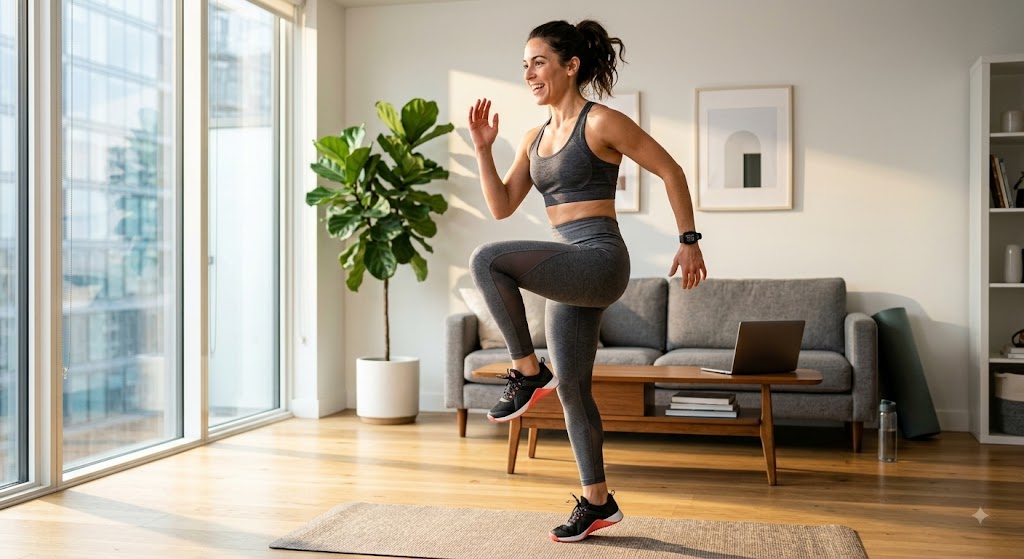
Losing weight at home is entirely possible and often far more convenient for busy professionals balancing tight work schedules. Home fitness routines can produce fat-loss results just as effective as a gym membership, provided you stay consistent. Research shows that individuals exercising at home often stick to their programs better over 12 weeks due to reduced travel friction. In this guide, we will break down how to burn fat at home without equipment while keeping your routine fast and efficient. Read on.
Quick Answer
- Core Principle: You can burn fat at home using simple bodyweight exercises combined with a structured calorie deficit strategy.
- Calorie Deficit: Aim for a sustainable 20% calorie deficit relative to your total daily energy expenditure.
- Protein Target: Consume roughly 1.6 to 2.0 grams of protein per kilogram of body weight to support muscle retention and stay full.
- Key No-Equipment Moves: Focus on movements like jumping jacks, burpees, squat jumps, high knees, plank jacks, and mountain climbers.
- Frequency: Perform 15 to 30 minutes of moderate to high-intensity bodyweight circuits 2 to 3 times per week.
- Nutrition Focus: Pair your workouts with a nutrient-dense diet rich in protein, fresh vegetables, fiber, and healthy fats.
- Consistency: Long-term fat loss is driven by consistent weekly habits rather than short, extreme efforts.
Why Home Workouts Can Be Effective for Fat Loss
Fat loss ultimately comes down to creating a caloric deficit. Regardless of whether you train in a commercial gym or your living room, you must burn more calories than you consume to reduce stored body fat. Maintaining a 20% caloric deficit while getting sufficient daily protein ensures that the weight you lose comes primarily from fat rather than muscle.
Home cardio and bodyweight routines utilize movements like high knees, jumping jacks, sit-ups, and mountain climbers to elevate your heart rate quickly. While these workouts are sometimes marketed as magic “fat burners,” doing the exercises alone is not enough—without a managed calorie intake, total body fat percentage will not decrease significantly.
Guidance from ACE Fitness confirms that bodyweight training builds functional baseline strength and improves cardiovascular fitness without requiring specialized gear.
Should You Do Home Workouts?
Adherence is the primary predictor of long-term success. You should choose a style of exercise that aligns with your preferences:
- Do home workouts if: You prefer privacy, have a busy work schedule, want to save time commuting, or find that working out at home helps you stay consistent.
- Skip high-intensity home circuits if: You dislike fast-paced cardio and would rather focus strictly on traditional weightlifting or low-impact activities like walking.
Best No-Equipment Exercises for Beginners
If you are new to bodyweight training, start with this low-impact, introductory circuit. Perform 2 sets of 10 to 15 repetitions for each move, resting 30 to 60 seconds between exercises. This simple routine takes about 15 to 20 minutes:
- Glute Bridge: Lie on your back with feet flat on the floor. Push through your heels to lift your hips while squeezing your glutes and core.
- Chair Squat: Stand in front of a sturdy chair. Lower your hips back and down until your glutes touch the seat gently, then drive through your heels to stand.
- Knee Pushup: Lower your chest toward the floor with knees resting on a mat, maintaining a straight line from knees to shoulders.
- Forearm Plank: Hold a rigid plank position on your forearms for 30 to 60 seconds while keeping your abdominal muscles braced.
- Side-Lying Hip Abduction: Lie on your side and raise your top leg upward in a controlled motion without rotating your hips.
Sample Home Fat-Burning Workout
For individuals with limited time, high-intensity bodyweight circuits maximize calorie burn in short timeframes. Aim for an intensity where you can speak short phrases but would struggle to hold a lengthy conversation or sing.
Perform each of the following 6 movements for 30 seconds back-to-back without stopping. Once you complete all 6 exercises, rest for 30 to 60 seconds. Repeat the entire circuit 2 to 3 times per week, fitting as many total rounds as you comfortably can into a 15 to 30-minute window. Always include a brief warm-up prior to starting.
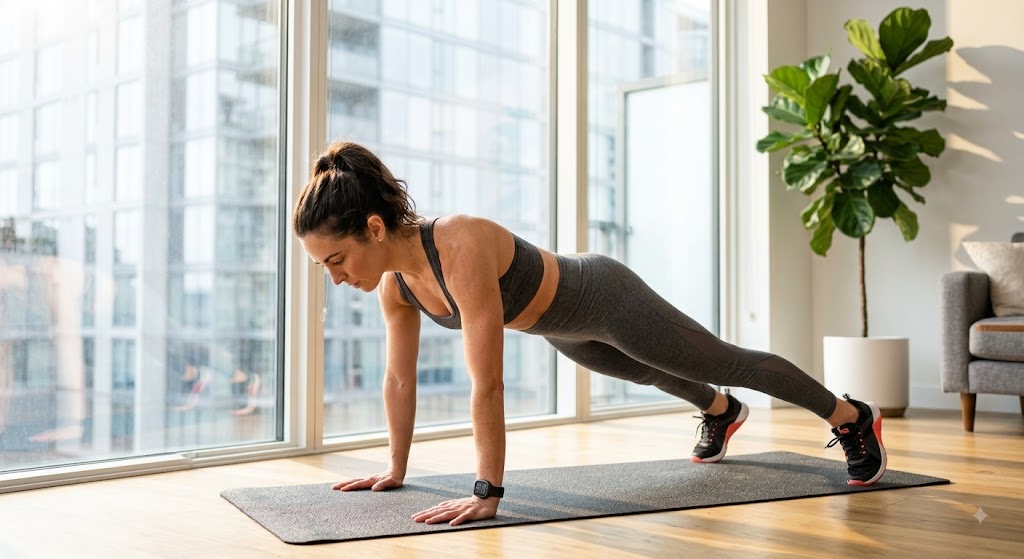
- Jumping Jacks: Start standing, jump your feet wider than shoulder-width while sweeping your arms overhead, then return to the starting position rapidly.
- Burpees: From a standing position, drop into a squat, plant your hands, jump your feet back into a plank, jump your feet back under your chest, and finish with an explosive upward jump. (Beginners can substitute with a squat thrust by standing up without the final jump.)
- Squat Jumps: Lower into a standard squat, keeping your chest up and core engaged, then launch upward explosively, landing softly directly back into the next rep.
- Skater Jumps: Leap laterally from side to side, crossing your trailing leg behind you while swinging your arms naturally to maintain balance.
- Plank Jacks: Hold a steady high plank position with hands under shoulders. Jump your feet wide and back together rapidly while keeping your hips level.
- High Knees: Run in place briskly, driving your knees upward toward your chest while pumping your arms rhythmically.
Nutrition Tips to Support Fat Loss
Physical activity creates the stimulus, but nutrition determines your overall fat loss pace. Rather than following overly restrictive fad diets, focus on evidence-based nutrition principles:
Calorie Deficit and Protein Targets
- Controlled Deficit: A moderate daily energy reduction of 500 to 750 calories generally yields roughly 1 pound of sustainable fat loss per week, as detailed in research from Harvard Health.
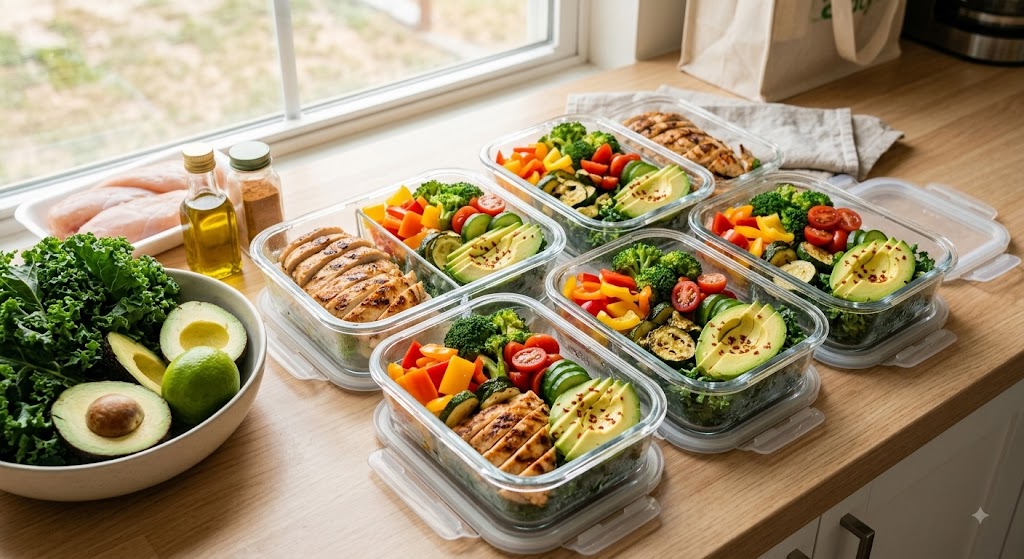
- Prioritize Protein: According to clinical research published by the National Institutes of Health (NIH), higher protein diets preserve lean muscle tissue and significantly boost satiety during calorie-restricted phases. Consider preparing budget-friendly high-protein meal prep options to stay consistent.
- Whole Foods Focus: Base the majority of your daily meals around lean meats, fish, eggs, fresh vegetables, fruits, legumes, and healthy fats.
Meal Timing Considerations
- Substantial Early Meals: Eating higher-protein, nutrient-dense meals earlier in the day helps manage hunger pangs later in the evening.
- Minimize Late-Night Snacking: Consuming heavy, high-calorie meals right before bed can interfere with sleep quality and overall daily calorie management. Establishing healthy bedtime habits helps optimize overnight recovery.
Common Mistakes That Slow Fat Loss
- Relying Solely on Scale Weight: Scale weight fluctuates daily due to water retention and sodium levels. Track waistline measurements, clothing fit, and progress photos instead.
- Overly Severe Calorie Restrictions: Slashing calories excessively triggers intense muscle loss, energy crashes, and uncontrollable hunger rebound spikes.
- Underestimating Food Intake: Failing to track small daily bites, cooking oils, and condiments can accidentally eliminate your calorie deficit.
- Ignoring Low-Impact Movement: Intense circuits are great, but integrating simple daily movements like walking regularly without going to the gym significantly boosts total calorie expenditure.
- Consuming Liquid Calories: Fruit juices, sugary coffee drinks, and sodas pack heavy amounts of sugar and calories without offering satiety.
- Misleading Packaged Foods: Processed snacks labeled “low fat” or “fitness” often contain high amounts of added sugar. Always check the nutrition facts panel.
Conclusion
Burning fat at home without equipment is completely achievable, even for busy professionals with tight schedules. By pairing regular 15 to 30-minute high-intensity bodyweight workouts with a well-managed calorie deficit and high protein intake, you can achieve remarkable body composition changes over time. Stay consistent, prioritize recovery, and focus on sustainable daily habits.
Frequently Asked Questions
How long does it take to notice fat loss from home workouts?
Most individuals notice improvements in cardiovascular stamina and daily energy within 2 to 3 weeks. Visible changes in body composition and weight loss typically appear between 4 to 8 weeks of consistent nutrition and training.
Do I need supplements to lose fat at home?
No. Supplements are not mandatory for fat loss. Energy balance, consistent exercise, adequate dietary protein, and quality sleep are the real drivers of results.
Can beginners safely do high-intensity home workouts?
Yes, provided beginners start with low-impact exercise variations, moderate rep ranges, and longer rest intervals, gradually increasing exercise speed and volume over time.
What should I do on rest days while trying to burn fat?
Rest days should focus on active recovery. Light activities such as walking, gentle stretching, or mobility work encourage blood flow without causing excessive muscle fatigue.
Why am I exercising at home but not losing fat?
If fat loss has stalled, you are likely consuming more calories than you realize or overestimating the energy burned during short home workouts. Auditing your weekly food tracking usually resolves the plateau.