
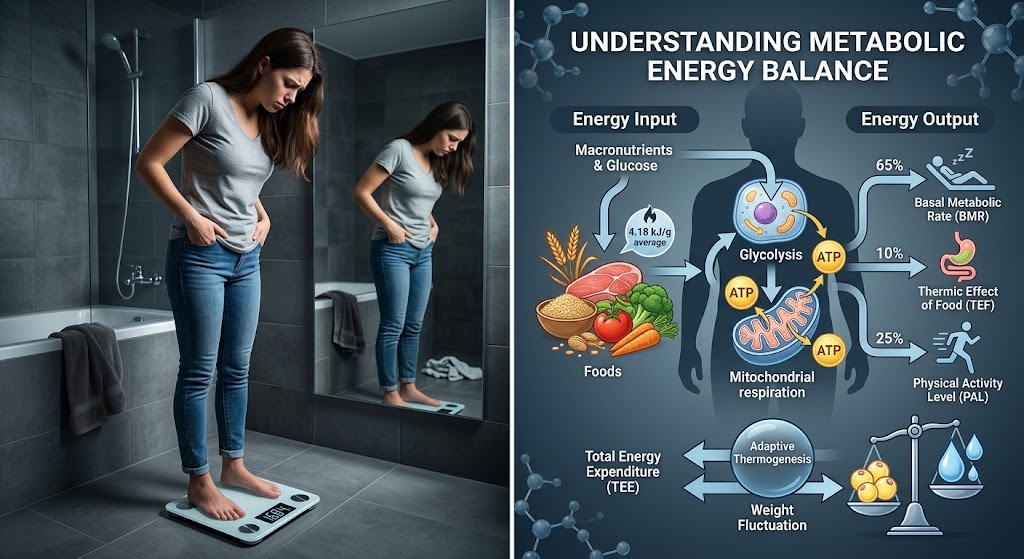
There comes a point in your weight loss journey when, no matter how hard you try, the scale just won’t budge. You could be lifting as hard as you can and cutting calories, but nothing changes. At such a point, most people wonder why this is happening. In this article, we will tackle the question head-on: how do I know if I’m in metabolic adaptation or just not losing weight? Read on.
Quick Answer
- A weight-loss plateau does not automatically mean you are experiencing metabolic adaptation.
- Metabolic adaptation occurs when your body burns less energy because of weight loss or prolonged calorie restriction, reducing energy expenditure beyond what is expected from losing body mass alone.
- Possible clues of metabolic adaptation include a prolonged plateau, increased hunger, and reduced spontaneous everyday movement.
- Most weight-loss stalls stem from miscounted calories, reduced daily movement, or water retention masking fat loss.
- Achieving overall body-fat loss requires a steady approach; adopting a structured diet break or refining tracking can help resume progress.
What Is Metabolic Adaptation?
Metabolic adaptation is your body’s built-in survival mechanism. Your body doesn’t realize that you are intentionally trying to drop weight; instead, it interprets prolonged energy restriction as a sign of famine. To protect you, it starts conserving energy by slowing down your baseline metabolic rate so you burn fewer calories overall.
According to research published by the National Institutes of Health (NIH), adaptive thermogenesis can cause energy expenditure to drop significantly more than predicted by changes in body weight alone.
How Metabolic Adaptation Happens
As you start losing weight, your body attempts to defend its previous set point. It rearranges the levels of key hormones that regulate appetite, fullness, and metabolic rate:
- Leptin Decreases: Leptin signals satiety to your brain. As fat cells shrink, leptin levels drop, leaving you feeling constantly unsatisfied.
- Ghrelin Increases: Ghrelin is the hunger hormone. Elevated ghrelin levels make you experience stronger hunger pangs and cravings.
As detailed by Cleveland Clinic, these hormonal shifts work together to encourage you to consume more calories and restore energy balance.
Why Your Calorie Needs Decrease as You Lose Weight
As you shed body mass, your overall energy requirements naturally fall. A smaller body requires fewer calories to move and maintain baseline functions. Consequently, the calorie intake that originally created a deficit may eventually become your new maintenance calorie level.

How Do I Know If I’m in Metabolic Adaptation or Just Not Losing Weight?
A weight-loss stall does not automatically confirm metabolic adaptation. There is no simple single test or scale reading that can confirm it instantly. You cannot determine from the scale alone whether you’re experiencing metabolic adaptation, so it is crucial to rule out other common reasons first.
Possible Signs of Metabolic Adaptation
- Prolonged Plateau After Substantial Fat Loss: Progress stalls for over 4 weeks despite strict, accurate tracking and consistent physical activity.
- Persistent High Hunger & Low Energy: Experiencing intense fatigue, cold intolerance, and chronic hunger pangs throughout the day.
- Lower Resting Energy Expenditure: Measurable reductions in resting energy output beyond what is expected for your new body size.
Other Reasons You Might Not Be Losing Weight
- Inaccurate Calorie Tracking: Uncounted cooking oils, dressings, snacks, liquid calories, or weekend meals can inadvertently eliminate your calorie deficit.
- Reduced Spontaneous Movement (NEAT): You may unconsciously sit more or fidget less. As noted by Mayo Clinic, non-exercise activity thermogenesis (NEAT) accounts for a major portion of total daily burn and drops during dieting.
- Water Retention Masking Fat Loss: High sodium, elevated stress (cortisol), intensive workouts, or hormonal fluctuations can cause water retention that masks fat loss on the scale.
- Normal Weight-Loss Slowdown: Progress naturally slows as you get leaner because your total daily burn is lower.
Weight-Loss Plateau vs. Metabolic Adaptation
| Feature | Temporary Plateau | Metabolic Adaptation |
|---|---|---|
| Duration | 1 to 3 weeks typically | 4+ weeks of stalled progress |
| Metabolic Rate | Normal or expected for body weight | Measurably lower than expected |
| Primary Cause | Water retention, tracking errors, or NEAT drop | Hormonal adaptation & adaptive thermogenesis |
| Recovery Time | A few days to 2 weeks | Weeks to months of controlled calories |
| Hormonal Shift | Minor or temporary fluctuations | Significant leptin drop, high ghrelin |
What Should I Do If I Think Metabolic Adaptation Is Slowing My Weight Loss?
If you suspect metabolic adaptation is slowing down your progress, taking a structured approach can help get things moving again without harming your health:
- Consider a Controlled Diet Break: Temporarily raising your calories to maintenance levels for 1 to 2 weeks can help reduce stress, restore leptin levels, and reduce psychological fatigue.
- Prioritize Protein and Fiber: Keep your meals satiating by serving high-protein foods with plenty of fiber to preserve lean muscle and manage hunger.
- Focus on Strength Training: Incorporate resistance training workouts to protect your muscle mass, which keeps your resting metabolic rate higher.
- Improve Sleep and Stress Management: Aim for 7 to 9 hours of quality sleep every night and adopt healthy bedtime habits to support metabolism.
- Increase Daily Step Count: Counter balance drops in NEAT by intentionally adding a daily walk, which helps burn fat without excessive physical strain.

When Should I Talk to a Doctor About Difficulty Losing Weight?
If you have been strictly consistent with your diet and exercise for several weeks without any progress or changes in waist measurements, it is advisable to consult a medical professional. A doctor can run blood work to rule out underlying health conditions, such as:
- Thyroid disorders (e.g., Hypothyroidism)
- Polycystic Ovary Syndrome (PCOS)
- Insulin resistance or prediabetes
- Hormonal imbalances
- Side effects from prescription medications
- Sleep apnea
Frequently Asked Questions
How long does metabolic adaptation last?
The duration depends on factors like total weight lost, length of energy restriction, and overall activity. Metabolic adaptations gradually diminish as calorie intake is restored to maintenance and body weight stabilizes.
Does eating more calories reset your metabolism?
Increasing calories does not instantly “reset” your metabolism, but bringing calories up to maintenance helps lower cortisol, regulate hunger hormones, and boost daily energy expenditure.
Can stress cause a weight-loss plateau?
Yes. Chronic stress elevates cortisol levels, which can promote fluid retention and mask fat loss on the scale while also increasing appetite and sugar cravings.
Should I lower my calories again when my weight stops changing?
Not right away. First, carefully audit your portion sizes, tracking accuracy, and daily movement. Lowering calories too frequently can lead to extreme hunger and unsustainable dieting.
Is metabolic adaptation the same as a slow metabolism?
No. A naturally lower metabolic rate is baseline genetics, whereas metabolic adaptation is an active physiological response to weight loss or severe caloric restriction.