
If you are trying to lose weight and have done your research, you must have come across protein repeatedly. It is an essential nutrient when reshaping your body composition. In this article, we will answer the crucial question in detail: how much protein do I need in a day to build muscle while losing fat? Read on.
Quick Answer
- Target Range: Aim for 1.6 to 2.2 grams of protein per kilogram of body weight (approx. 0.7 to 1.0 grams per pound) daily for optimal body recomposition.
- Meal Distribution: Spread your protein intake evenly across 3 to 5 meals throughout the day rather than eating it all in one sitting.
- Whole Food Focus: You do not rely solely on supplements; foods like chicken breast, eggs, fish, Greek yogurt, cottage cheese, lentils, and tofu are excellent options.
- The Calorie Factor: Protein preserves lean tissue, but burning body fat still requires maintaining an appropriate consistent calorie deficit.
- Synergy with Exercise: Combine adequate protein with progressive resistance training workouts to stimulate muscle growth while dropping body fat.
What Is the Baseline Amount of Protein You Need?
The standard Recommended Dietary Allowance (RDA) for protein is 0.8 grams per kilogram of body weight (around 0.36 grams per pound). However, this is merely the minimum amount required to prevent deficiency in sedentary adults. Research analyzed by Harvard Health confirms that active individuals and those attempting fat loss need significantly higher intakes to preserve lean muscle tissue.
Why Do You Need More Protein When Losing Fat?
Eating an elevated amount of protein while in an energy deficit aids fat loss through multiple physiological mechanisms:
- Increased Satiety: Protein stimulates fullness hormones (like peptide YY and GLP-1) while dampening hunger hormones like ghrelin, helping control appetite naturally.
- Higher Thermic Effect of Food (TEF): Your body expends roughly 20% to 30% of the calories consumed from protein just to digest and assimilate it, compared to 5%–10% for carbs and 0%–3% for fats.
- Muscle Mass Preservation: When calorie intake drops, your body may break down muscle for energy. Adequate protein provides essential amino acids to prevent muscle degradation.
How Much Protein Should You Eat in Each Meal?
To maximize muscle protein synthesis throughout the day, aim for 20 to 40 grams of protein per main meal (or roughly 0.40 to 0.55 grams per kilogram of body weight per meal). Guidelines supported by the International Society of Sports Nutrition (ISSN) recommend spreading total daily protein evenly across 3- to 4-hour intervals.
Starting your morning with a protein-rich breakfast sets a stable tone for blood sugar and reduces afternoon cravings.
Important Dietary Considerations
While increasing protein is beneficial, balance remains crucial for long-term health:
- Balance with Fiber and Water: High-protein diets require adequate dietary fiber and fluid intake to prevent constipation and support smooth digestion.
- Upper Limits and Health Constraints: Extremely excessive intakes (exceeding 3.5 grams per kg daily) offer no additional muscle-building benefit and can cause digestive distress. Clinical guidance from Mayo Clinic advises individuals with pre-existing kidney conditions to consult a physician before significantly increasing protein.
Best High-Protein Foods
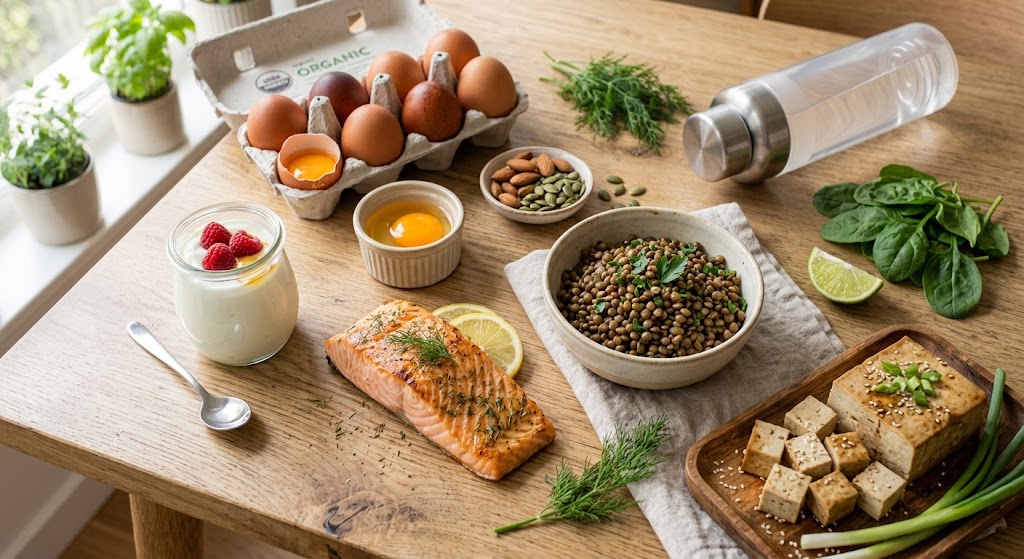
Selecting nutrient-dense whole foods helps you hit your protein goals while staying within your daily calorie allowance.
Animal-Based Protein Sources
Animal proteins are complete sources containing all nine essential amino acids necessary for tissue repair:
- Chicken Breast: Extremely lean, providing high protein density with minimal fat.
- Turkey Breast: A versatile, low-fat poultry alternative to chicken.
- Salmon & White Fish: Provides high-quality protein along with healthy omega-3 fatty acids for muscle recovery.
- Greek Yogurt: Packed with protein and probiotics; ideal for breakfast or snacks without needing prep work.
- Whole Eggs & Egg Whites: Highly bioavailable protein source rich in vital micronutrients.
- Cottage Cheese: Contains slow-digesting casein protein, keeping you satiated for hours.
Plant-Based Protein Sources
Vegetarian and vegan sources offer quality protein alongside healthy fats and dietary fiber:
- Tofu & Tempeh: Complete plant proteins that absorb flavor easily in scrambles and stir-fries.
- Lentils & Beans: Nutrient-dense options providing both protein and digestive fiber.
- Quinoa: A complete grain protein rich in magnesium, iron, and key minerals.
- Almonds & Chia Seeds: Ideal additions to oatmeal or smoothies for added healthy fats and protein.
How to Combine High Protein With a Calorie Deficit
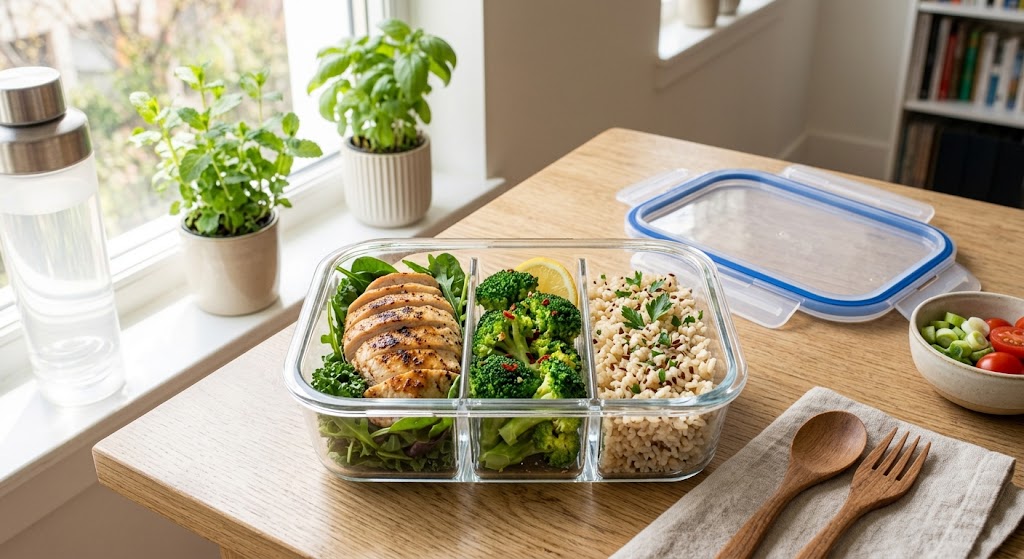
If you weigh 75 kg (165 lbs), aiming for 1.6 to 2.2 grams per kg translates to approximately 120 to 165 grams of protein per day. Divide this intake across 4 meals (e.g., ~30–40g per meal) to maintain satiety and optimize digestion.
Common Protein Mistakes to Avoid
- Ignoring Overall Meal Balance: Do not eliminate complex carbs and healthy fats entirely; balance is essential for hormone production and workout performance.
- Relying Excessively on Shakes: Protein powders are convenient supplements, but whole food sources provide superior micronutrients and satiety.
- Fixating Exclusively on Anabolic Windows: Total daily protein intake matters far more than consuming a shake within minutes after a workout.
- Neglecting Bedtime Recovery: Establishing healthy bedtime habits to support metabolism ensures your body repairs muscle tissue efficiently overnight.
Frequently Asked Questions
Can you build muscle while losing fat at the same time?
Yes. This process is known as body recomposition. By combining progressive resistance training, a modest calorie deficit, and adequate protein, your body can use stored fat for energy while synthesizing new muscle tissue.
Does eating protein help you stay full while dieting?
Yes. Protein takes longer to digest and triggers satiety hormones, making it easier to manage hunger pangs while maintaining a caloric deficit.
Should you eat protein before or after a workout?
Both are beneficial, but your total daily protein intake is the most important factor. Consuming a protein-rich meal within 1 to 2 hours before or after training supports optimal recovery.
Can you get enough protein without using protein powder?
Absolutely. Protein powders are merely convenient tools. Whole foods like eggs, poultry, fish, dairy, legumes, and tofu easily provide all the protein required for muscle building.
Is protein more important than calories when trying to lose fat?
No. While protein protects lean muscle mass, overall energy balance determines weight loss. You cannot lose body fat without maintaining an appropriate calorie deficit, regardless of how much protein you eat.